Top 10 Attractions in Luxor, Egypt: The Best Places to Visit in the World’s Greatest Open-Air Museum

There is a reason travelers call Luxor the world’s greatest open-air museum. Spread across both banks of the Nile in Upper Egypt, this remarkable city sits directly on top of ancient Thebes — once one of the most powerful and sacred cities in the ancient world. The pharaohs who built the pyramids at Giza are well known, but it was the rulers buried beneath Luxor’s western hills who created some of the most breathtaking monuments ever raised by human hands.
Luxor is not a city with a few interesting ruins on its outskirts. It is a living landscape of ancient temples, royal tombs, mortuary complexes, colossal statues, sacred lakes, and processional avenues — all woven together by more than three thousand years of history. Every street corner seems to lead somewhere remarkable. Every turn reveals another carved stone surface, another towering column, another corridor that once rang with the chanting of priests.
Whether you are arriving on a day trip from Hurghada, sailing in on a Nile cruise, or spending several days exploring on your own, narrowing down where to spend your time is not easy. This guide walks you through the top 10 attractions in Luxor — the places that genuinely deserve a place on every visitor’s itinerary, explained honestly so you can plan your visit with confidence.
Quick Navigation — Top 10 Attractions in Luxor:
Understanding Luxor: East Bank and West Bank
Before diving into the individual sites, it helps to understand how Luxor is organized. The Nile divides the city into two very distinct areas, and the ancient Egyptians deliberately organized their world along the same boundary.
The East Bank — where the sun rises — was the land of the living. This is where the great temples stood: Karnak and Luxor Temple, both dedicated to the living cult of Amun-Ra and the gods of the Theban Triad. Today, most of Luxor’s hotels, restaurants, and the Corniche (the riverside promenade) are also on the east bank.
The West Bank — where the sun sets — was the land of the dead. Here, the pharaohs constructed their vast mortuary complexes: royal tombs hidden in the limestone cliffs, temples for the worship of deceased kings, and chapels where priests maintained the eternal cults of the buried pharaohs. The Valley of the Kings, the Temple of Hatshepsut, Medinet Habu, and the Valley of the Queens all lie on the west bank.
Most visitors spend at least two days in Luxor — one on each bank. If you are on a day trip from Hurghada or similar, a well-organized itinerary can cover highlights from both banks in a single long day, though you will necessarily make choices about what to prioritize.

01
Karnak Temple Complex

If Luxor is the world’s greatest open-air museum, then Karnak Temple is its centerpiece exhibit. This vast religious complex on the east bank of the Nile is not a single temple but an entire city of temples, chapels, pylons, obelisks, courtyards, and sacred spaces accumulated over approximately two thousand years of continuous construction.
The complex covers more than 100 hectares. More than thirty pharaohs contributed to its construction, from the Middle Kingdom rulers of around 1950 BCE all the way through the Ptolemaic period. The result is one of the most architecturally layered and historically dense sites anywhere in the world.
The undisputed highlight is the Great Hypostyle Hall — a forest of 134 enormous sandstone columns, the largest standing approximately 21 meters tall. Built primarily under Seti I and Ramesses II of the 19th Dynasty, the hall is covered from floor to capital with carved hieroglyphs and pictorial reliefs. In ancient times it was roofed, painted in brilliant colors, and dimly lit by clerestory windows — an enclosed space of overwhelming sacred power. Today, open to the sky, it remains one of the most physically impressive spaces ever created.
Beyond the Hypostyle Hall, Karnak rewards exploration with its towering obelisks (including Hatshepsut’s 29.5-meter red granite monument), the peaceful Sacred Lake, the open-air museum containing some of the finest Middle Kingdom and New Kingdom carved chapels, and kilometers of wall reliefs recording military campaigns, religious ceremonies, royal coronations, and offerings to the gods.
- Location: East Bank, approximately 3 km northeast of central Luxor
- Best time to visit: Early morning or late afternoon
- Time needed: 2–4 hours minimum
- Highlight: Great Hypostyle Hall, Hatshepsut’s obelisk, Sacred Lake
- Evening option: Sound and Light Show
Karnak is the single most important site in Luxor. Under no circumstances should you leave the city without visiting it.
02
Valley of the Kings

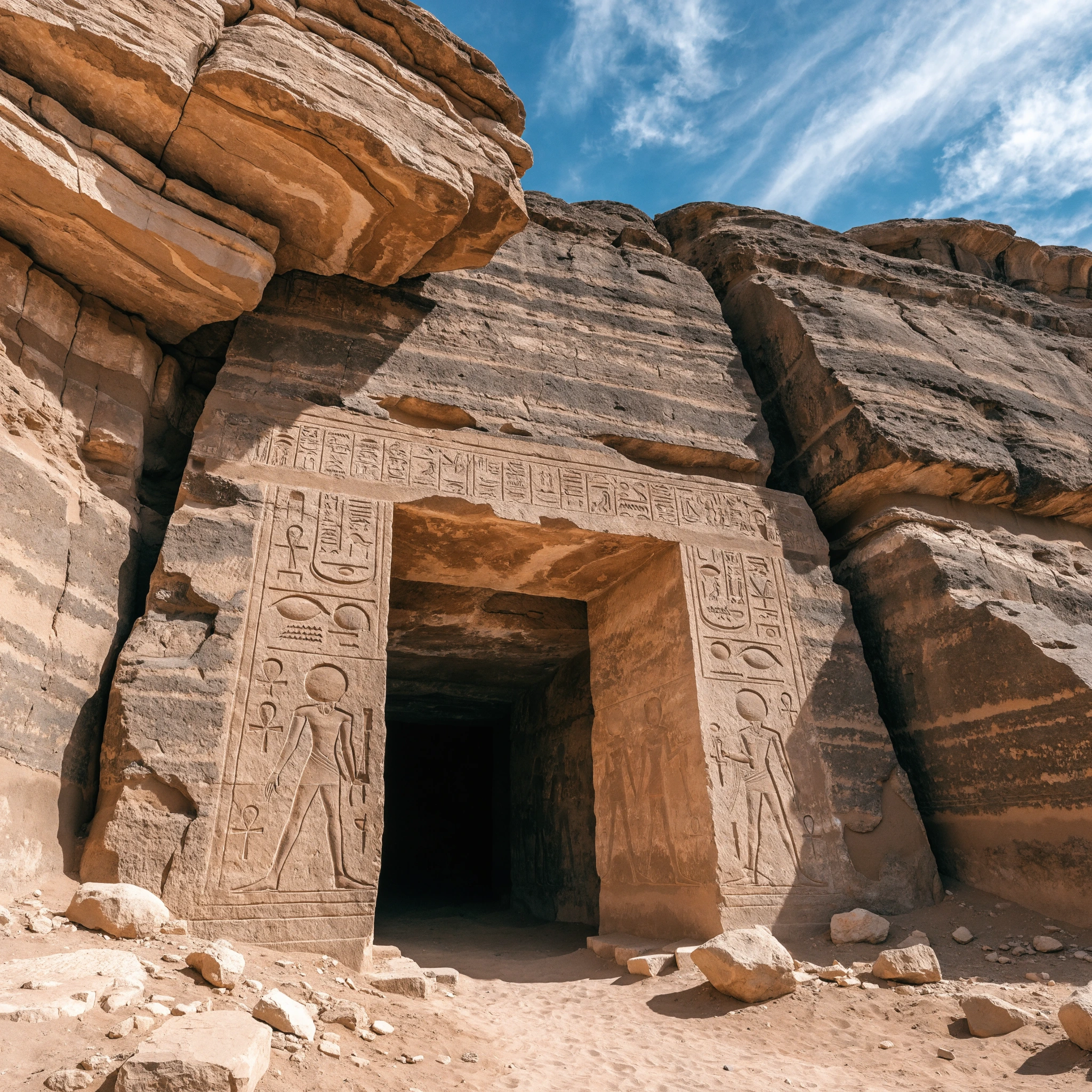
Few places on earth carry the atmosphere of the Valley of the Kings. Hidden in a dry, sun-scorched valley on the west bank of the Nile, this is where Egypt’s New Kingdom pharaohs — from Thutmose I through Ramesses XI — chose to be buried. For nearly 500 years, from approximately 1550 to 1070 BCE, the valley received royal burial after royal burial. Today, more than 60 tombs have been identified, belonging to pharaohs, members of the royal family, and high officials.
The idea of building here was deliberate. Earlier pyramid tombs had proven vulnerable to robbers. By cutting tombs deep into the living rock of remote limestone cliffs, and by separating the burial chamber from the mortuary temple (which was built on the valley floor below), the New Kingdom rulers hoped to protect their mummies and their grave goods for eternity. In most cases, despite extraordinary efforts, they were not successful — most tombs were robbed in antiquity. The great exception was Tutankhamun’s tomb, discovered intact by Howard Carter in 1922, whose treasures are now displayed in the Egyptian Museum in Cairo.
A standard ticket for the Valley of the Kings includes access to three tombs, chosen from among those currently open to visitors. Some tombs require additional tickets: the tombs of Tutankhamun, Seti I, and Ramesses V and VI are among those that may require separate payment. Not all tombs are open at any one time — some are under conservation, others are rotated to reduce wear.
Among the most visually stunning tombs are those of Ramesses III, Ramesses VI, Seti I, and Amenhotep II. The interior walls are covered with scenes from the Egyptian Books of the Afterlife — the Amduat, the Book of Gates, the Book of the Dead — vivid cosmological texts that guided the pharaoh through the dangers of the underworld and into eternal life.
- Location: West Bank, approximately 7 km from the Nile ferry crossing
- Best time to visit: Early morning
- Time needed: 2–3 hours
- Highlight: Painted tomb corridors, hieroglyphic cosmological texts
- Note: Photography restrictions apply inside most tombs — check current rules before visiting
03
Luxor Temple


Standing directly on the east bank of the Nile in the heart of modern Luxor, Luxor Temple is among the best-preserved and most visually striking ancient temples in Egypt. Unlike Karnak, which sprawls across an enormous complex and was built by dozens of rulers over two millennia, Luxor Temple has a more architecturally unified character — primarily the work of two great pharaohs, Amenhotep III and Ramesses II.
The temple was dedicated to the Theban Triad — Amun-Ra, Mut, and Khonsu — and served as the destination of the annual Opet Festival procession from Karnak. During the Opet Festival, the divine statues were carried along the Avenue of Sphinxes from Karnak to Luxor Temple, where Amun was believed to renew his creative power and the pharaoh’s divine authority was reaffirmed.
The entrance to Luxor Temple is dominated by the massive pylon of Ramesses II, decorated with scenes of his military campaigns. Originally two obelisks stood here; one remains, the other was given to France in the 19th century and now stands in the Place de la Concorde in Paris. Colossal seated statues of Ramesses II flank the entrance.
Inside, the beautiful colonnade of Amenhotep III — 14 towering papyrus-cluster columns along the processional axis — creates one of the most elegant interior spaces in ancient Egyptian architecture. The walls are richly carved with relief scenes of the Opet Festival, offering a vivid picture of this important ceremony.
One of Luxor Temple’s most fascinating features is the evidence of its long life. Within the complex, visitors can see the remains of a Roman military chapel, a Christian church whose apse was carved directly into an ancient hall, and a medieval Islamic mosque — the Mosque of Abu Haggag — which still functions today from a platform built above the ancient floor level. Layers of history, literally stacked on top of each other.
- Location: East Bank, central Luxor, directly on the Corniche
- Best time to visit: Late afternoon, or after dark when illuminated
- Time needed: 1–2 hours
- Highlight: Colonnade of Amenhotep III, entrance pylon, evening illumination
- Tip: Combine with a walk along the restored Avenue of Sphinxes
04
Temple of Hatshepsut at Deir el-Bahari

Of all the monuments on Luxor’s west bank, the Temple of Hatshepsut at Deir el-Bahari makes perhaps the most immediate visual impact. Rising in three colonnaded terraces against the towering buff limestone cliffs of the Theban hills, it looks less like a building and more like something that grew directly from the rock face — austere, geometric, and breathtaking in its setting.
Hatshepsut, who ruled Egypt as pharaoh from approximately 1473 to 1458 BCE, was one of the most successful rulers of the New Kingdom. She oversaw a period of great prosperity, sent trading expeditions to the land of Punt, and built prolifically across Egypt — most famously at Karnak. Her mortuary temple at Deir el-Bahari, known in ancient Egyptian as Djeser-Djeseru (“Holy of Holies”), was designed to serve her eternal cult after death.
The temple’s three ascending terraces were originally fronted by gardens with exotic trees brought back from Punt. The interior walls are decorated with some of the finest relief carving of the New Kingdom — vivid narrative scenes depicting the divine birth of Hatshepsut (in which Amun is shown as her true father), the famous expedition to Punt (showing the goods traded and the exotic landscape of that distant land), and elaborate offering ceremonies.
Hatshepsut’s temple stands alongside the earlier mortuary temple of Mentuhotep II of the 11th Dynasty — the ruler who reunified Egypt after the First Intermediate Period and built the original temple that inspired Hatshepsut’s design nearly 500 years later. The proximity of the two temples makes Deir el-Bahari a site of deep historical layers.
- Location: West Bank, accessible by road or via a mountain path from the Valley of the Kings
- Best time to visit: Early morning (before tour groups arrive) or late afternoon
- Time needed: 1–1.5 hours
- Highlight: Three-terraced architecture, Punt expedition reliefs, divine birth narrative
- Tip: The mountain path connecting the Valley of the Kings to Deir el-Bahari offers extraordinary views but requires reasonable fitness
05
Colossi of Memnon

Rising abruptly from the flat agricultural plain at the entrance to the west bank archaeological zone, the Colossi of Memnon are impossible to miss — and impossible not to admire. These two enormous seated statues of Amenhotep III, carved from quartzite sandstone and standing approximately 18 meters tall (nearly 60 feet), are among the largest surviving statues in Egypt.
They were originally built as guardians to the entrance of Amenhotep III’s vast mortuary temple — a complex that in its day was likely the largest and most lavishly decorated temple in Egypt. The mortuary temple itself is largely destroyed (much of its stonework was reused in later construction), but the two guardian statues still stand, weathered but monumental, in front of the invisible building they were made to protect.
The colossi have their own remarkable story in the ancient world. After an earthquake in 27 BCE damaged the northern statue, it reportedly began producing a musical sound — described as a singing or whistling — at dawn each day, caused by rising temperatures and moisture within the cracked stone. Ancient Greek and Roman tourists traveled to hear the “singing Memnon,” and their graffiti inscriptions — recording their visits and their astonishment — can still be seen on the statue’s legs. When the Roman emperor Septimius Severus repaired the statue in the 3rd century CE, the sound stopped.
Ongoing archaeological work at the site of Amenhotep III’s mortuary temple has revealed numerous extraordinary sculptures, many of which are displayed in the Luxor Museum and other collections. The site continues to yield discoveries.
- Location: West Bank, at the main entrance to the west bank archaeological zone
- Best time to visit: Morning light is ideal for photography
- Time needed: 20–30 minutes (often a stop on the way to or from other west bank sites)
- Highlight: Sheer scale, ancient Greek and Roman graffiti on the legs
- Tip: Free to view from the road; small entry area for closer access
06
Luxor Museum


Egypt’s great archaeological museums are not all in Cairo. The Luxor Museum, situated on the east bank Corniche between Karnak and Luxor Temple, is widely regarded as one of the finest purpose-built archaeological museums in Egypt — and arguably one of the best presented museums in the country.
Opened in 1975, the museum houses a carefully curated collection of artifacts from the Luxor region, displayed with excellent lighting and intelligent organization. The collection is not as enormous as the Egyptian Museum in Cairo, but its quality is outstanding — and the presentation makes individual objects far more accessible to the general visitor.
Among the highlights:
- A magnificent colossal head of Amenhotep III, one of the finest royal portraits of the New Kingdom
- Statues from the Karnak Cachette, including a beautifully preserved calcite statue of Amenhotep III
- A reconstructed wall of talatat blocks from Akhenaten’s Aten temple at Karnak, reassembled to show ritual scenes from the Aten period
- Objects from the tomb of Tutankhamun, including two royal mummies displayed in a dedicated gallery
- Extraordinary military artifacts from the New Kingdom period, including decorated chariots
- Sculptures recovered from the site of Amenhotep III’s mortuary temple, many discovered during recent excavations
If you are visiting Luxor’s outdoor sites in the heat of the day, the Luxor Museum is an ideal place to retreat — air-conditioned, beautifully lit, and endlessly rewarding. It is also open in the evenings, making it a good option for the last hours of a Luxor day.
- Location: East Bank, on the Corniche between Karnak and Luxor Temple
- Best time to visit: Midday (escape the heat) or evening
- Time needed: 1.5–2 hours
- Highlight: Amenhotep III head, Akhenaten talatat wall, Tutankhamun gallery
07
Medinet Habu
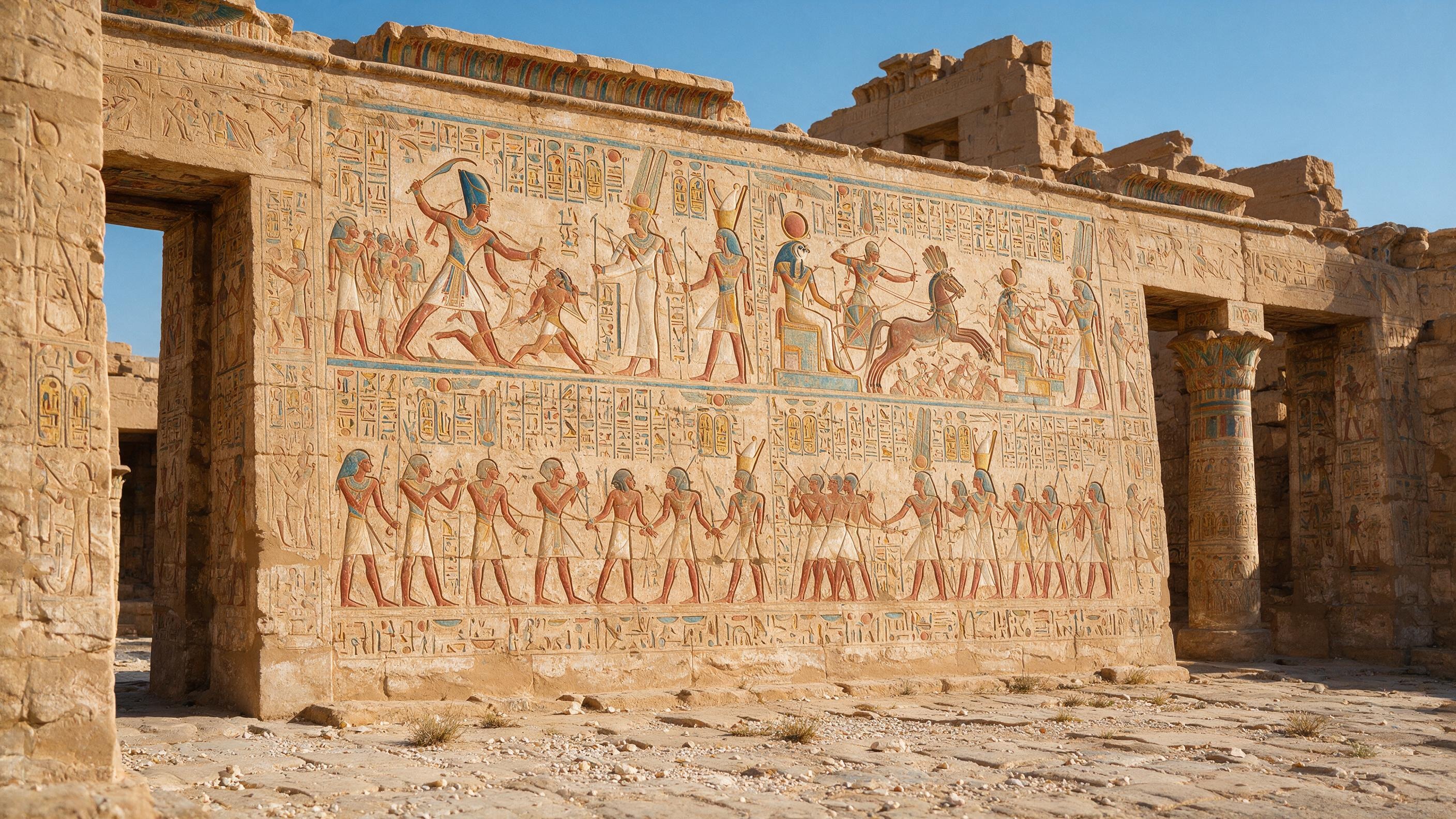

Of all the monuments on Luxor’s west bank, Medinet Habu is perhaps the most underrated. Tourists dutifully visit the Valley of the Kings and Hatshepsut’s temple, and many skip Medinet Habu entirely — which means they miss one of the best-preserved and most dramatically decorated ancient temple complexes in Egypt.
Medinet Habu is the mortuary temple of Ramesses III, the last great pharaoh of the New Kingdom (reigning approximately 1184–1153 BCE). Built to serve the eternal cult of the king after death and to celebrate his military achievements in life, the temple is enclosed within massive mudbrick walls and preceded by a unique fortified gatehouse modeled on a Syrian migdol fortress.
The walls of Medinet Habu carry some of the most extensive and best-preserved relief carvings in Egypt — and crucially, large areas still retain their original paint. This is rare. Most ancient Egyptian temples show bare stone today; at Medinet Habu, the vivid colors of the original decoration are still visible in sheltered areas, giving a genuine sense of how these buildings looked in antiquity.
The relief scenes include dramatic depictions of Ramesses III’s battles against the Sea Peoples — a confederation of invaders whose origin is still debated by historians — fought by land and sea around 1175 BCE. The naval battle scene is one of the most detailed and exciting military reliefs in ancient Egyptian art. Other scenes record battles against Libyan tribes, religious ceremonies, and the daily rituals of the royal cult.
The complex also contains an earlier temple dating to the 18th Dynasty, associated with Hatshepsut and Thutmose III, as well as chapels added by later rulers. It is a site of extraordinary historical density that rewards patient exploration.
- Location: West Bank, southern end of the archaeological zone
- Best time to visit: Morning or afternoon; often less crowded than other west bank sites
- Time needed: 1.5–2 hours
- Highlight: Sea Peoples battle reliefs, surviving painted decoration, fortified gatehouse
- Tip: Bring a torch or use your phone light to see reliefs in darker interior chambers
08
Valley of the Queens
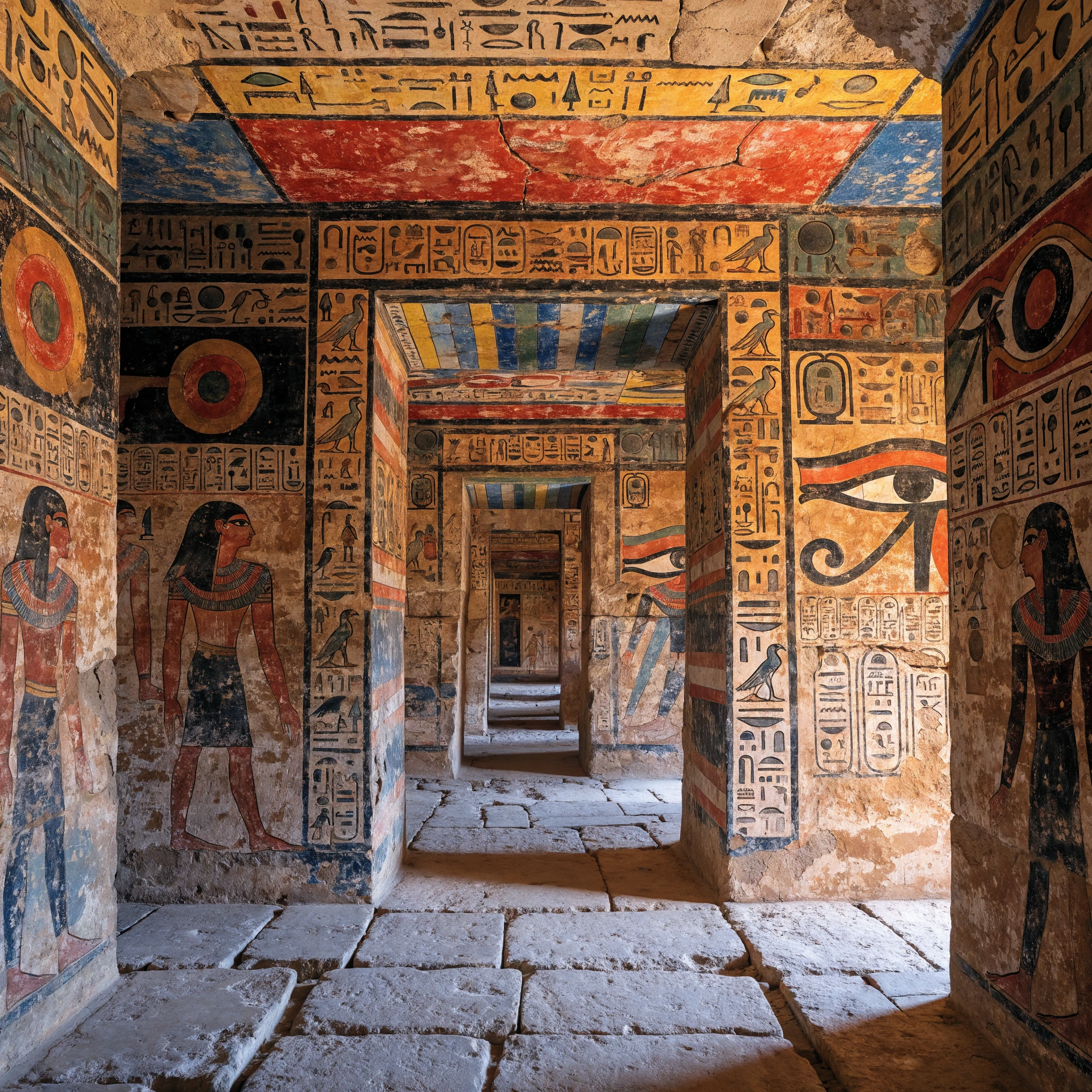
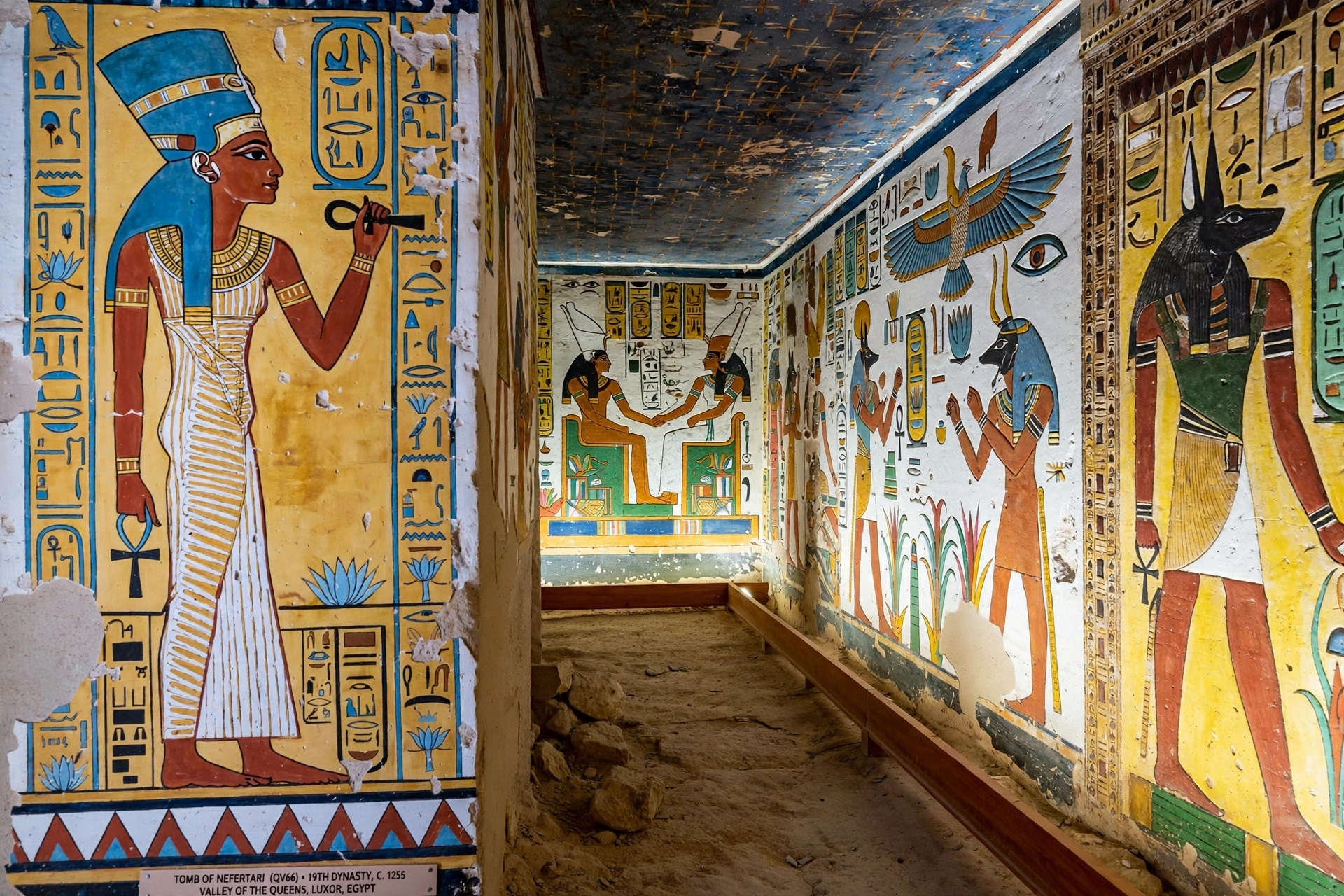
To the south of the Valley of the Kings, a separate valley holds the tombs of queens, royal children, and high officials of the New Kingdom. The Valley of the Queens contains more than 90 tombs, though not all are open to visitors at any one time.
The overwhelming reason to visit the Valley of the Queens is a single tomb: that of Nefertari, beloved chief wife of Ramesses II, whose burial chamber is widely considered the most beautiful ancient tomb in the world. The walls are decorated with exquisitely detailed and brilliantly colored scenes from the Book of the Dead, showing Nefertari’s journey through the afterlife. The painting quality is extraordinary — fine, delicate, and in remarkable condition after a painstaking international conservation project in the 1980s and 1990s.
Because of the tomb’s fragility, access to Nefertari’s tomb requires a separate, significantly more expensive ticket, and visitor numbers are strictly limited. If your budget allows, it is one of the most memorable experiences available anywhere in Egypt. Even travelers who consider themselves unmoved by ancient history often describe Nefertari’s tomb as a genuinely emotional experience.
Other notable tombs in the valley include those of Queen Titi and several sons of Ramesses III, which also carry fine painted decoration.
- Location: West Bank, south of the main archaeological zone
- Best time to visit: Morning
- Time needed: 1–1.5 hours
- Highlight: Tomb of Nefertari (separate ticket required)
- Note: Nefertari’s tomb ticket prices and availability should be confirmed locally before visiting
09
Avenue of Sphinxes

One of the most dramatic recent developments in Luxor’s archaeological landscape is the reopening of the Avenue of Sphinxes — the ancient processional road that once linked Karnak Temple to Luxor Temple along a distance of approximately 2.7 kilometers.
In ancient times, this road was lined on both sides with sphinx statues — ram-headed at the Karnak end (representing Amun) and human-headed toward the Luxor Temple end. The avenue was the route of the great Opet Festival procession, when the sacred statues of the Theban Triad were carried from Karnak to Luxor Temple amid music, incense, crowds, and celebration.
Over the centuries, the avenue was buried beneath streets, homes, and buildings as the modern city of Luxor grew up around and over it. A long-running excavation and restoration project gradually uncovered the sphinxes and the ancient road surface. In November 2021, in a widely publicized ceremony, the restored avenue was formally reopened to the public.
Walking the Avenue of Sphinxes today — particularly in the evening when the sphinxes are illuminated — is one of the most evocative experiences available in Luxor. Not all of the original statues survive, and some sections are more complete than others, but the restored avenue gives a genuine sense of the ancient processional landscape. Beginning at Luxor Temple and walking north toward Karnak, or vice versa, allows visitors to connect two of Egypt’s greatest monuments along the same sacred path that priests and pharaohs walked three thousand years ago.
- Location: East Bank, connecting Karnak and Luxor Temple
- Best time to visit: Evening, when illuminated
- Time needed: 30–60 minutes for a walk along the avenue
- Highlight: Illuminated sphinxes at night, the connection between two great temples
- Tip: Walk the avenue as part of an evening visit that includes Luxor Temple
10
Tombs of the Nobles
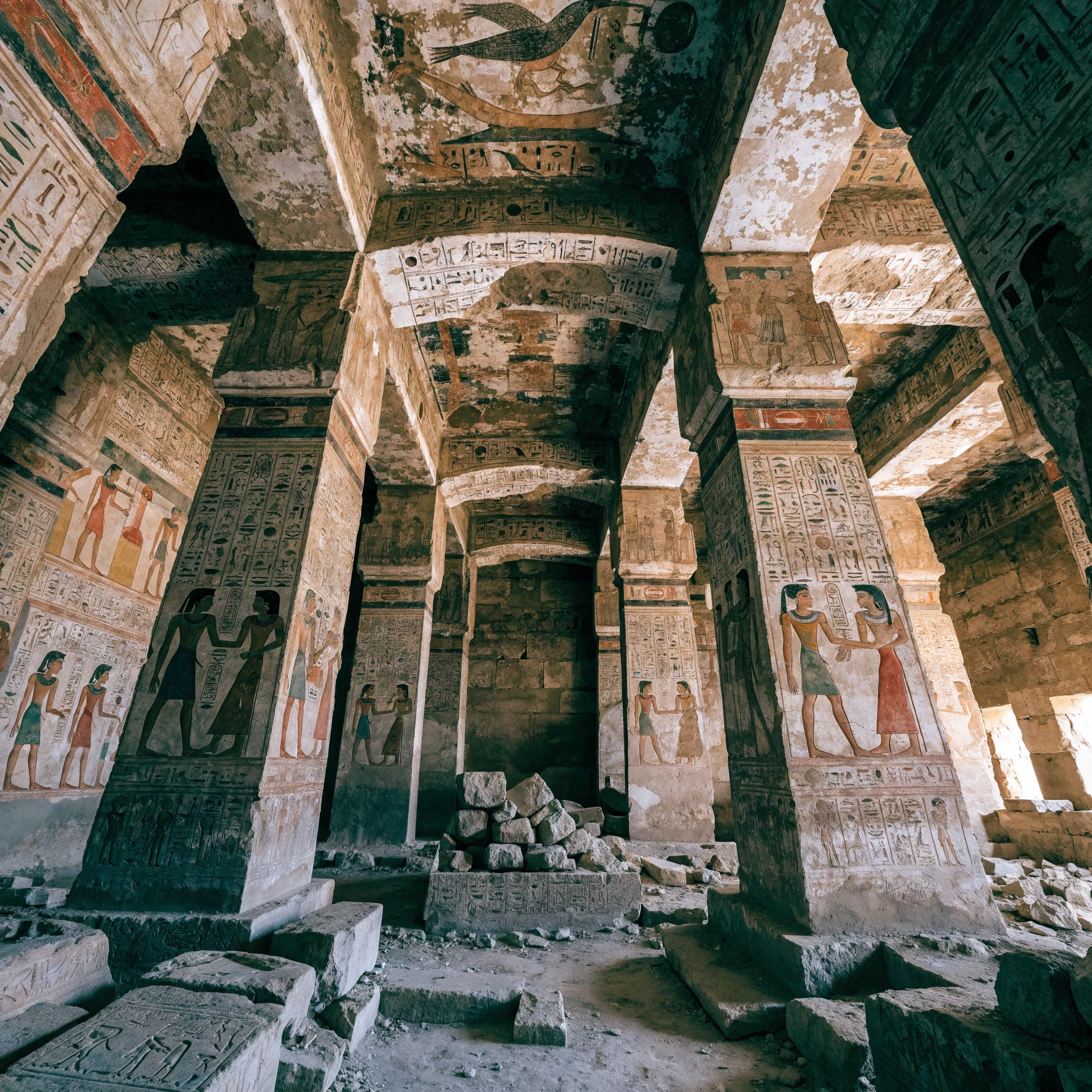

Most visitors to Luxor’s west bank focus on the royal monuments — the Valley of the Kings, Hatshepsut’s temple, Medinet Habu. The Tombs of the Nobles are often overlooked, which is a genuine shame, because these painted tomb chapels offer something the royal tombs do not: a window into the everyday life of ancient Egypt.
Scattered across the hillside of Sheikh Abd el-Qurna and neighboring areas on the west bank, the Tombs of the Nobles are the burial places of senior officials, viziers, mayors, priests, and other high-ranking members of New Kingdom Theban society. More than 400 tomb chapels have been identified, though only a fraction are open to visitors at any one time.
The paintings in these tombs are among the most charming and humanly accessible in all of Egyptian art. Unlike the royal tombs, which tend to focus on religious and cosmological texts, the nobles’ tombs often feature scenes from daily life: harvesting grain, making wine, fishing, fowling in the marshes, hosting banquets, musicians playing, craftsmen working, children playing games, and much more. These are some of the most vivid and joyful images to survive from the ancient world.
Notable tombs include those of Sennefer (the “tomb of the vine”), whose ceiling is covered with a spectacular painted grape arbor; Nakht, whose agricultural and banquet scenes are among the finest examples of 18th Dynasty painting; Rekhmire, vizier to Thutmose III, whose tomb records extraordinary detail about the duties and ceremonies of the highest office in the land; and Ramose, a vizier of Amenhotep III and Akhenaten, whose reliefs show both traditional and Amarna-style artistic conventions in the same space — a remarkable transitional document.
- Location: West Bank, Sheikh Abd el-Qurna area
- Best time to visit: Morning or afternoon; tickets are grouped by tomb clusters
- Time needed: 1–2 hours depending on how many tombs you visit
- Highlight: Everyday life paintings, Sennefer’s vine ceiling, Nakht’s banquet scenes
- Tip: Hire a guide who can explain the paintings and identify the scenes — the context dramatically increases your appreciation
Practical Tips for Visiting Luxor’s Attractions
Getting Around Luxor
- East bank: Taxis and private cars are the easiest option between sites. Agree on the price before departure.
- West bank: Minibuses, taxis, and bicycle rental are all options. Many visitors hire a driver for a half-day or full-day west bank circuit.
- Between banks: A road bridge connects the two banks south of the main tourist area. A local passenger ferry also crosses the river near Luxor Temple — a quick, inexpensive, and atmospheric way to reach the west bank.
Organized Tours vs. Independent Visits
Both approaches work well in Luxor. Organized tours — including day trips from Hurghada, Nile cruise excursions, and locally arranged guided tours — provide transport, licensed guides, and a structured itinerary, which is particularly valuable at sites like the Valley of the Kings and Karnak, where context dramatically enriches the experience.
Independent visitors have the flexibility to spend more time at sites that interest them and move at their own pace. Hiring an independent Egyptologist guide on arrival in Luxor is a good middle option.
Suggested Itineraries
| Duration | Recommended Itinerary |
|---|---|
| Half day | Karnak Temple + Luxor Temple (evening) |
| Full day | Morning: Valley of the Kings + Hatshepsut Temple + Colossi of Memnon. Afternoon/evening: Karnak Temple + Luxor Temple |
| Two days | Day 1: East Bank (Karnak, Luxor Museum, Luxor Temple, Avenue of Sphinxes). Day 2: West Bank (Valley of the Kings, Hatshepsut Temple, Medinet Habu, Colossi of Memnon, Tombs of the Nobles) |
| Three days | All of the above, plus Valley of the Queens, deeper exploration of individual sites, Karnak Sound and Light Show |
General Visitor Tips
- Start early. Luxor’s heat — especially from April through September — is intense. Beginning at opening time allows you to cover the most ground before midday.
- Bring water. Dehydration is a genuine risk. Carry more water than you think you need, especially on the west bank where facilities are more limited.
- Wear sun protection. Hat, sunscreen, and light long-sleeved clothing are all sensible choices at open-air sites.
- Hire a qualified guide. Luxor’s monuments carry infinitely more meaning with expert interpretation. A licensed Egyptologist guide is worth the investment, particularly for Karnak and the Valley of the Kings.
- Verify tickets and opening hours. Prices, site access, and opening hours in Egypt can change. Always check current information through your hotel, tour operator, or the Egyptian Ministry of Tourism and Antiquities before visiting.
- Respect the monuments. Do not touch wall reliefs or carvings. Do not climb on statues. Do not remove fragments of stone. These rules exist to preserve sites that have survived for thousands of years.
Frequently Asked Questions About Luxor Attractions
What is the most famous attraction in Luxor?
Karnak Temple is widely considered the most famous and impressive attraction in Luxor. The Valley of the Kings and Luxor Temple are also among Egypt’s most visited sites. Collectively, Luxor’s monuments make it one of the most archaeologically significant cities in the world.
How many days do you need to see Luxor?
Two days is the minimum recommended to cover the main highlights of both the east and west banks. Three days allows for a more relaxed and thorough visit. One day — as on a day trip from Hurghada — is possible but requires careful prioritization and an early start.
Can you visit Luxor in one day from Hurghada?
Yes. Luxor day trips from Hurghada are popular and well-organized, typically covering the Valley of the Kings, Hatshepsut Temple, Colossi of Memnon, and Karnak Temple. The road journey takes approximately 3.5–4 hours each way, so expect a long but rewarding day.
What is the best time of year to visit Luxor?
October through March offers the most comfortable temperatures, typically ranging from 20–30°C (68–86°F) during the day. Summer months (particularly June through August) are very hot, with temperatures regularly exceeding 40°C (104°F), making outdoor sightseeing more challenging.
Is Luxor safe for tourists?
Luxor is one of Egypt’s most-visited tourist cities and generally considered safe for visitors. Standard travel precautions apply. Check your government’s current travel advice before departing, and follow the guidance of your tour operator or local guide.
What is the difference between Karnak Temple and Luxor Temple?
Karnak is a vast complex built over 2,000 years by more than 30 pharaohs — the largest ancient religious site of its kind in the world. Luxor Temple is more compact and architecturally unified, primarily built by Amenhotep III and Ramesses II. Both are essential visits; Karnak overwhelms with its scale, while Luxor Temple impresses with its elegance and its extraordinary nighttime illumination.
Do you need a guide to visit Luxor’s sites?
You can visit most sites independently, but a qualified Egyptologist guide adds enormous value, particularly at Karnak Temple, the Valley of the Kings, and the Tombs of the Nobles. The history, mythology, and symbolism of these sites are far more accessible with expert interpretation.
Which Luxor attraction is most underrated?
Medinet Habu and the Tombs of the Nobles are both significantly underrated. Medinet Habu is one of the best-preserved mortuary temples in Egypt with extraordinary painted relief carvings. The Tombs of the Nobles offer an incomparable window into everyday life in ancient Thebes that the royal monuments cannot match.
Final Thoughts: Why Luxor Belongs on Every Egypt Itinerary
Cairo has the pyramids. Aswan has its granite quarries and Nubian landscapes. The Sinai has its diving and its mountain monasteries. But Luxor has something different — a depth of historical layering and a concentration of monumental architecture that is genuinely unmatched anywhere in the world.
The top 10 attractions listed here represent only a fraction of what Luxor has to offer. Beneath the city streets, ongoing excavations regularly reveal new discoveries. In the museum, artifacts from recently excavated sites continue to rewrite our understanding of the ancient world. On the west bank, conservation teams work year-round to preserve painted tombs that have survived for more than three thousand years.
Luxor is not a city where you rush through a checklist of monuments and move on. It is a place that rewards slow attention — time spent reading a wall, asking a question, finding a quiet corner of Karnak where the columns recede into shadow and the scale of human ambition becomes briefly comprehensible. Go with curiosity, give it time, and Luxor will give you far more than you arrived expecting.
Planning your visit to Luxor?
Read our complete guide to Karnak Temple,
explore Valley of the Kings,
or discover how to visit Luxor from Hurghada.