Karnak Temple, Luxor: The Complete Guide to Egypt’s Greatest Ancient Temple Complex
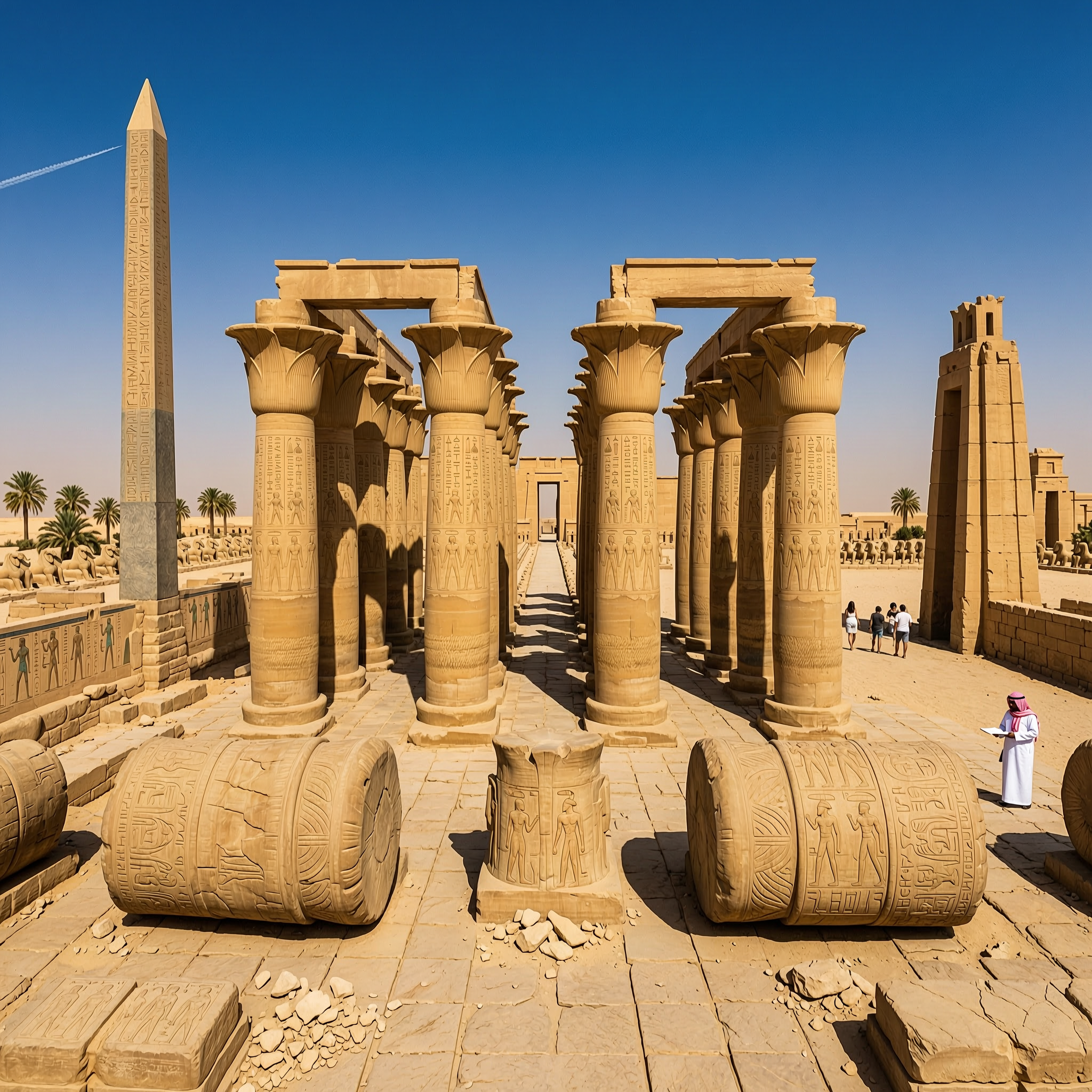
Step through the first great gateway, and the scale hits you before the history does. Columns taller than mature oak trees rise in every direction. Walls thick enough to contain whole rooms stretch toward the sky, their surfaces crowded with carved gods, pharaohs, and hieroglyphic texts that were already ancient when the Roman Empire was young. Obelisks catch the Egyptian sunlight overhead, and somewhere beyond the stone corridors, a sacred lake sits in green stillness, exactly where priests performed their purification rituals more than three thousand years ago.
This is Karnak Temple — and nothing in Egypt, or anywhere else on earth, quite prepares you for it.
Karnak is not a single building. It is a vast religious complex, the accumulated work of dozens of pharaohs across roughly two thousand years of construction, expansion, demolition, and reinvention. It sprawls across more than 100 hectares of the east bank of Luxor, making it one of the largest ancient religious sites in the world. The Great Temple of Amun-Ra at its heart was the most important place of worship in all of ancient Egypt for much of the country’s history, and the complex as a whole served as the spiritual engine of the Egyptian state during the New Kingdom — the era of Hatshepsut, Thutmose III, Ramesses II, and Tutankhamun.
Whether you are arriving on a day trip from Hurghada, spending several days exploring Luxor’s ancient monuments, or docking at Luxor on a Nile cruise, Karnak Temple should be at the very top of your list. This guide will walk you through its history, architecture, mythology, and the practical details you need to plan a genuinely rewarding visit.
Where Is Karnak Temple?
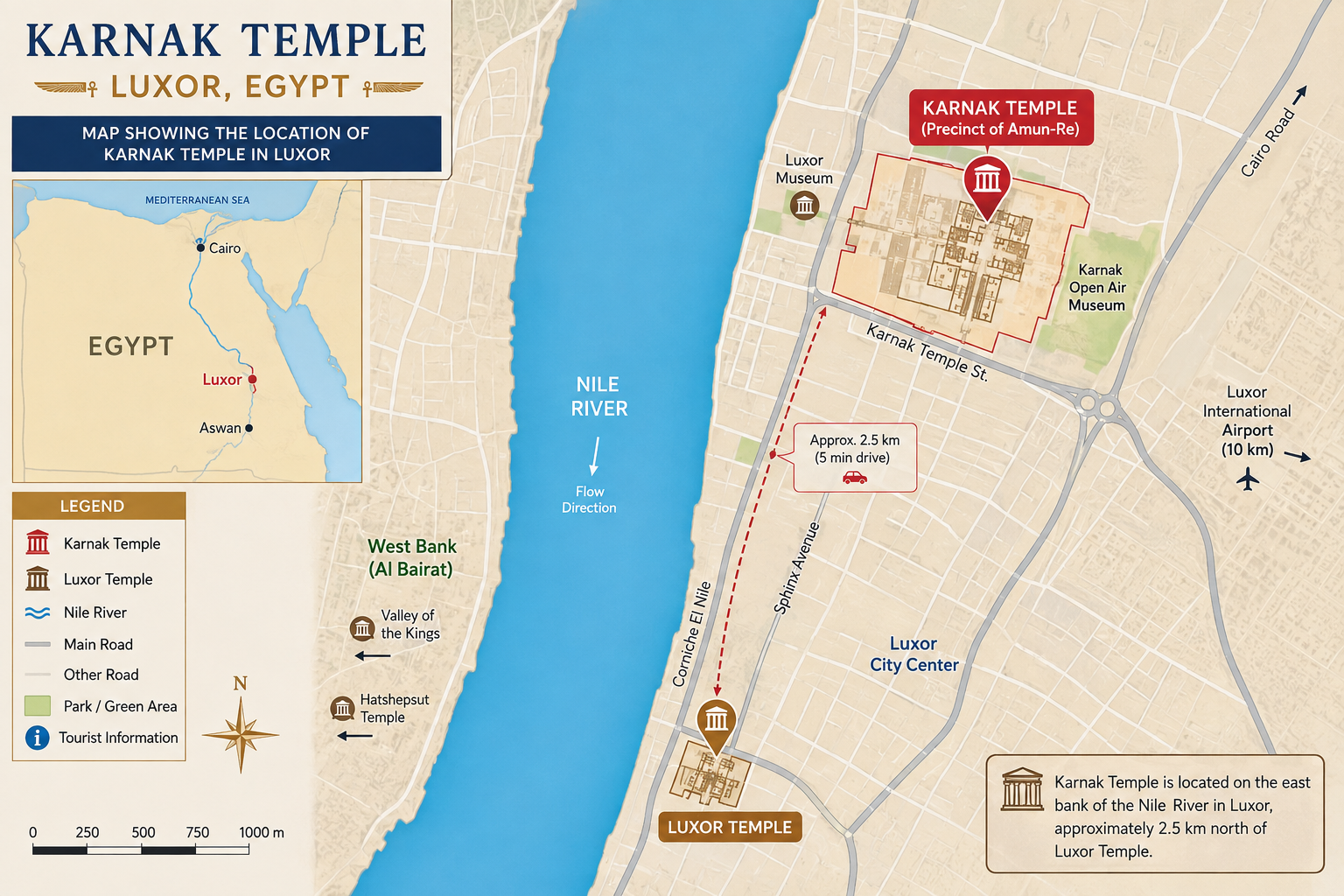
Karnak Temple sits on the east bank of the Nile in the city of Luxor, in Upper Egypt, approximately 650 kilometers south of Cairo. The complex is located about three kilometers northeast of Luxor’s modern center, and roughly 2.5 kilometers north of Luxor Temple. These two great temples were once connected by the Avenue of Sphinxes, a processional road lined with ram-headed and human-headed sphinx statues that has been partially restored and reopened in recent years.
Luxor occupies the site of ancient Thebes — one of the most powerful cities in the ancient world and the religious capital of Egypt during the New Kingdom (roughly 1550–1070 BCE). The ancient Egyptians divided their world along the Nile. The east bank, where the sun rose, was the land of the living. The west bank, where the sun set, was the land of the dead. Karnak and Luxor Temple stand on the east bank, the domain of the gods and daily life. The great royal tombs — the Valley of the Kings, the Temple of Hatshepsut at Deir el-Bahari, the Colossi of Memnon, and Medinet Habu — all lie on the west bank, among the funerary monuments.
This geographic relationship makes Luxor one of the richest archaeological landscapes on the planet. Karnak Temple complex, the largest and most elaborate of all the east bank temples, sits at its spiritual heart.
The History of Karnak Temple: Two Thousand Years of Construction
One of the most important things to understand about Karnak Temple is that no single pharaoh built it. Unlike the pyramids at Giza, which were planned and constructed as unified projects within a single reign, Karnak grew organically over approximately two millennia. Each generation of rulers added, modified, demolished, or rebuilt parts of the complex to glorify themselves, honor the gods, and demonstrate their piety and power.
The result is a dense archaeological palimpsest — layers upon layers of stone, ambition, and belief.
The Middle Kingdom: Early Beginnings
The earliest known structures at the Karnak site date to the Middle Kingdom, around the reign of Senusret I (approximately 1971–1926 BCE) of the 12th Dynasty. Senusret I constructed a small limestone chapel — known today as the White Chapel — which was later dismantled by subsequent builders but whose blocks were rediscovered inside the fill of a later pylon. The reassembled White Chapel is now displayed in the Open Air Museum at Karnak and remains one of the finest examples of Middle Kingdom relief carving in Egypt.
At this early stage, Karnak was a modest shrine dedicated to the local Theban god Amun. Thebes was not yet the dominant city of Egypt, and Amun was not yet the supreme god of the Egyptian pantheon. That transformation would come later — and Karnak would grow along with it.
The New Kingdom: The Golden Age of Karnak
The explosion of building activity at Karnak came with the New Kingdom (approximately 1550–1070 BCE), when Thebes became the political and religious capital of a newly reunified and militarily powerful Egypt.
The early 18th Dynasty pharaohs expanded the temple dramatically. Thutmose I (reigning approximately 1504–1492 BCE) erected massive pylons (monumental gateways), enclosed courtyards, and raised obelisks — two granite obelisks, one of which still stands. He essentially defined the processional axis that later builders would extend.
Hatshepsut, one of the very few women to rule Egypt as pharaoh, made extraordinary contributions during her reign (approximately 1473–1458 BCE). She erected at least two towering red granite obelisks in the heart of the complex, one of which survives as the tallest standing obelisk at Karnak, rising nearly 30 meters. She also built a suite of rooms around the central sanctuary and commissioned elaborate relief carvings describing her divine birth and coronation.
Thutmose III, her successor and stepson, became Egypt’s greatest military pharaoh. After Hatshepsut’s death, he launched an ambitious building program at Karnak, constructing the Festival Hall (Akh-Menu) in the eastern part of the temple, adding new pylons, and recording his military campaigns — most famously the Battle of Megiddo — on the temple walls. He also enclosed some of Hatshepsut’s monuments, though scholars continue to debate the motives and timing of these actions.
Amenhotep III, one of the wealthiest pharaohs of the 18th Dynasty, further embellished the complex and constructed the massive Third Pylon, incorporating earlier structures into its foundations.
The 19th Dynasty brought the most visually stunning addition to Karnak: the Great Hypostyle Hall. Begun under Seti I and largely completed by his son Ramesses II, this forest of 134 enormous sandstone columns remains one of the most awe-inspiring spaces in all of ancient architecture.
Ramesses II, never one for modesty, also added colossal statues, additional pylons, and vast quantities of inscriptions celebrating his military victories, particularly the Battle of Kadesh against the Hittites. His name appears on more surfaces at Karnak than any other pharaoh’s.
Ramesses III of the 20th Dynasty built a substantial temple within the first courtyard of the complex, complete with its own pylons and Osiride statues. By this point, Karnak had become a city of temples within a city.
Decline, Foreign Rulers, and Later Periods
After the New Kingdom, the political power of Thebes gradually declined, but Karnak remained an important religious site. The Third Intermediate Period and Late Period saw continued building activity, particularly by Libyan and Nubian dynasty rulers who sought legitimacy through association with Amun.
During the Ptolemaic period (305–30 BCE), Greek-speaking rulers of Egypt added their own structures and restored older ones. Some of the gateway decorations at Karnak date to this era. The Romans also left their mark — small chapels and modifications can be found within the complex — but by the time of the Roman Empire, the active cult of Amun at Karnak was fading. Early Christian communities eventually established a church inside the Hypostyle Hall, whose traces remain visible today.
The temple complex was gradually buried by sand and settlement over the following centuries, until European travelers and archaeologists began systematic study in the 19th century.
Why Was Karnak Temple Built? Religion, Power, and the Theban Triad
Modern visitors sometimes approach ancient Egyptian temples as if they were churches or mosques — public places where ordinary people gathered to pray. That is a fundamental misunderstanding. Egyptian temples were not places of congregational worship. They were the houses of the gods, maintained by priests who performed daily rituals on behalf of the pharaoh. The general public did not enter the inner sanctuaries. The temple existed to sustain the cosmic order — what the Egyptians called Ma’at — through offerings, ceremonies, and the constant maintenance of a god’s cult.
At Karnak, the primary deity was Amun, originally a relatively minor Theban god associated with air and hiddenness. As Thebes rose to national prominence during the Middle and New Kingdoms, Amun was elevated to the position of king of the gods and merged with the sun god Ra to become Amun-Ra, the supreme deity of the Egyptian state. Karnak became his greatest temple — the place where his divine power was believed to physically reside.
The religious framework at Karnak centered on the Theban Triad:
- Amun-Ra — king of the gods, lord of Karnak
- Mut — his consort, a powerful mother goddess, worshipped at her own precinct within the Karnak complex
- Khonsu — their son, god of the moon, also with his own temple at Karnak
The pharaoh served as the intermediary between humanity and the gods. By building, expanding, and embellishing Karnak, each ruler demonstrated their devotion to Amun-Ra — and in return, claimed divine sanction for their rule. The temple was therefore simultaneously a religious institution, a political statement, and an economic powerhouse: the vast estates of Amun at Karnak controlled enormous agricultural land, employed thousands of workers and priests, and stored tremendous wealth in gold, grain, and livestock.
Building at Karnak was never simply about piety. It was about legitimacy, prestige, and the perpetuation of the state.
Understanding the Karnak Temple Complex
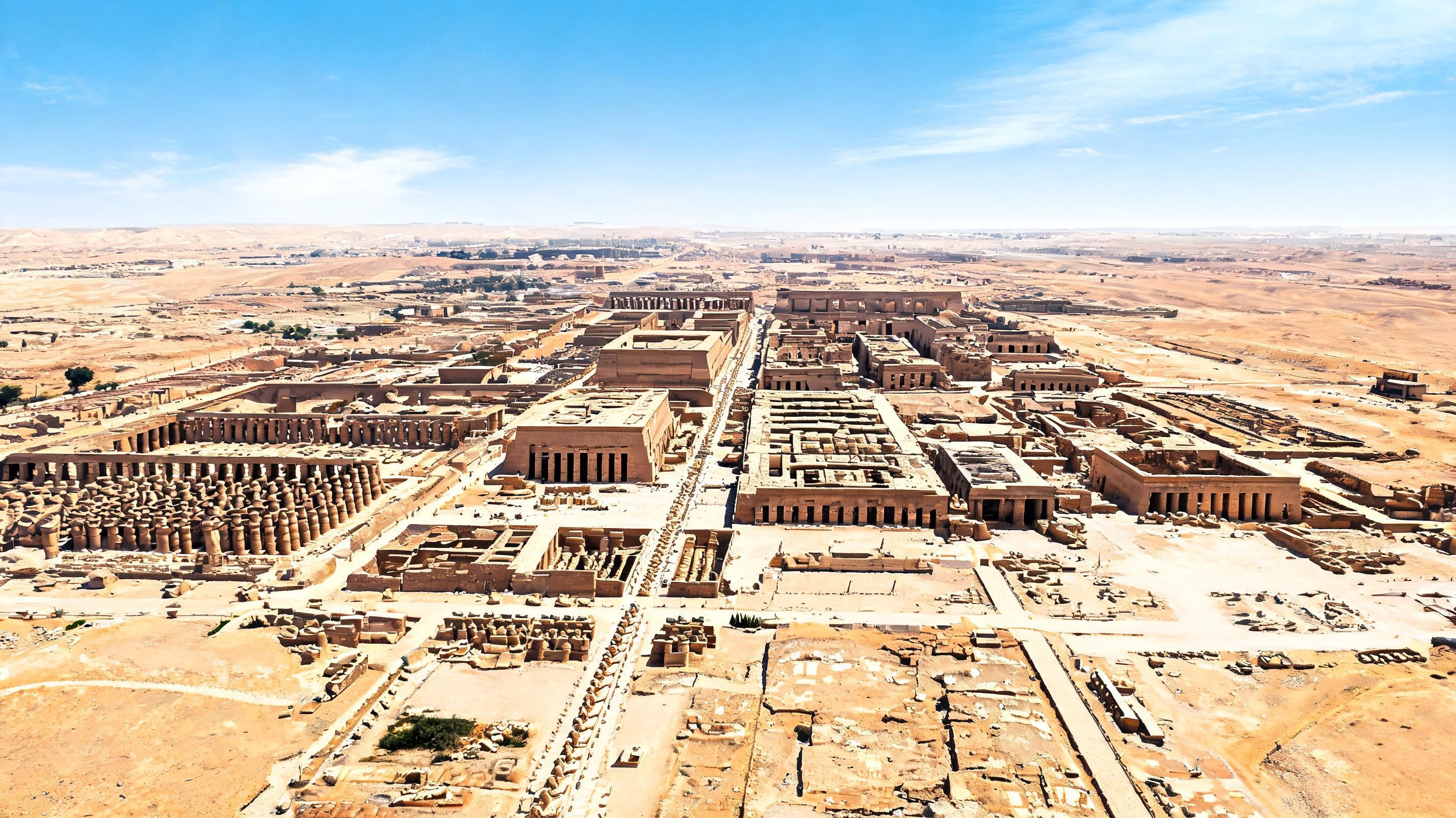
Karnak is frequently called the largest ancient religious site in the world, and while such superlatives can be difficult to verify precisely, the claim is reasonable. The complex as a whole covers a staggering area — more than 100 hectares, much of which has never been fully excavated.
The site is divided into four main precincts, each originally enclosed by mudbrick walls:
- The Precinct of Amun-Ra — the largest and most important, and the main area open to visitors today
- The Precinct of Mut — south of the main complex, centered on the temple of the goddess Mut, partially excavated and sometimes accessible
- The Precinct of Montu — to the north, dedicated to the war god Montu, largely unexcavated
- The Temple of Amenhotep IV (Akhenaten) — dismantled in antiquity, its blocks reused in other structures
Within the Precinct of Amun-Ra alone, visitors will encounter:
- Ten massive pylons (monumental gateways)
- Multiple courtyards and processional avenues
- The Great Hypostyle Hall
- Numerous smaller temples and chapels
- Obelisks
- Colossal statues
- The Sacred Lake
- An Open Air Museum (separate ticket)
- Walls covered with thousands of square meters of carved reliefs and inscriptions
It is, in every sense, a place that demands time, patience, and attention.
The Great Temple of Amun-Ra: Heart of Karnak
The central structure of the entire Karnak complex is the Great Temple of Amun-Ra, oriented along two axes. The primary east-west axis stretches from the first pylon (the main entrance) deep into the temple toward the original sanctuary. A secondary north-south axis intersects it, connecting the temple to the Precinct of Mut to the south and eventually to Luxor Temple via the Avenue of Sphinxes.
This temple was the single most important religious building in Egypt for much of the second millennium BCE. The wealth of Amun’s temple was legendary — the Papyrus Harris I, a document from the reign of Ramesses III, lists the temple’s assets as including hundreds of thousands of head of cattle, vast grain stores, ships, workshops, and enormous tracts of land.
The high priests of Amun at Karnak eventually became so powerful that they rivaled the pharaohs themselves. By the end of the New Kingdom, the priesthood effectively controlled Upper Egypt, and the office of God’s Wife of Amun became one of the most politically significant positions in the country.
For the pharaoh, adding to the Great Temple of Amun-Ra was both a sacred duty and a shrewd political investment. Every new pylon, every colossal statue, every inscription reinforced the ruler’s relationship with the supreme god — and with the institution that controlled much of Egypt’s wealth.
The Great Hypostyle Hall: Karnak’s Most Famous Space
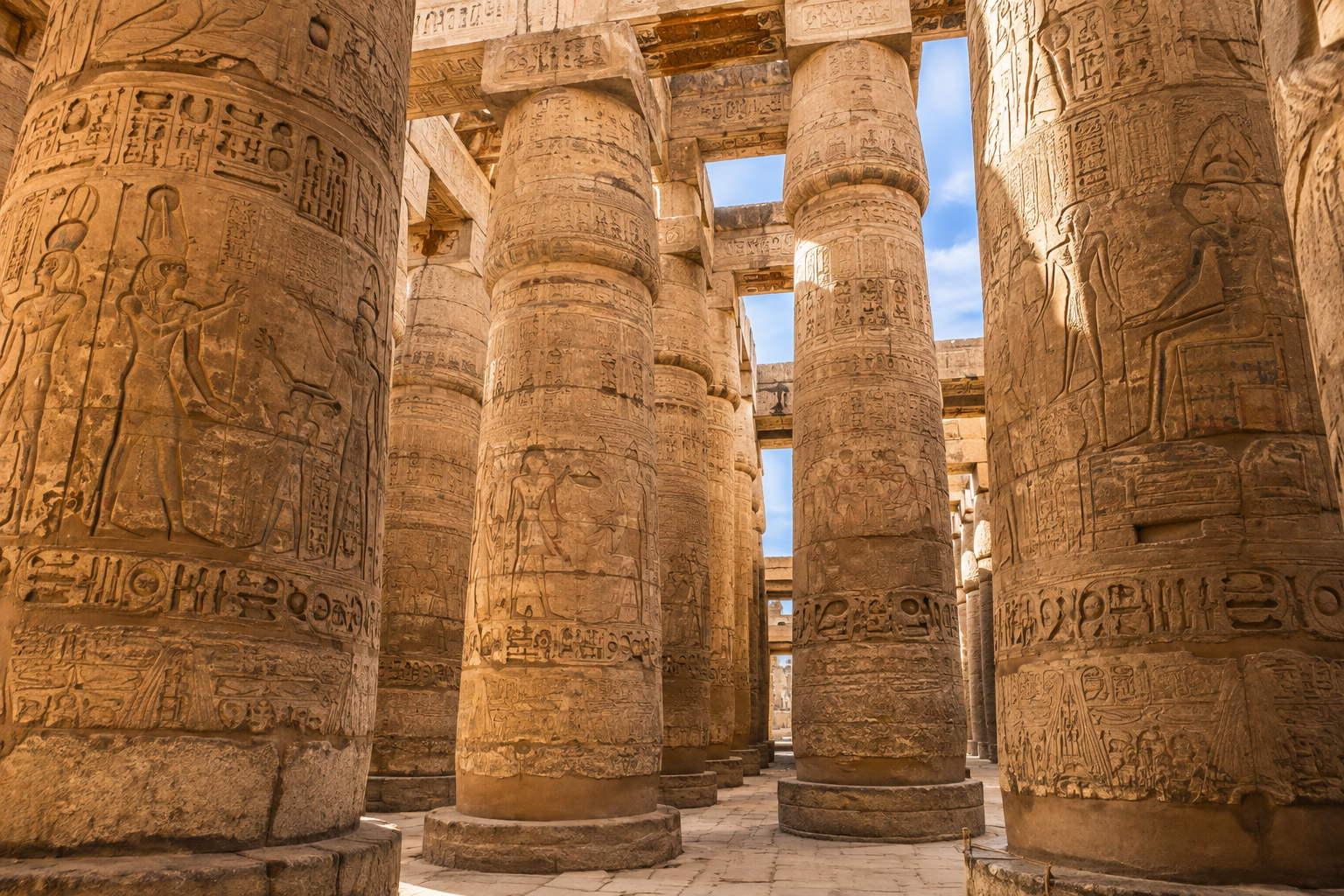
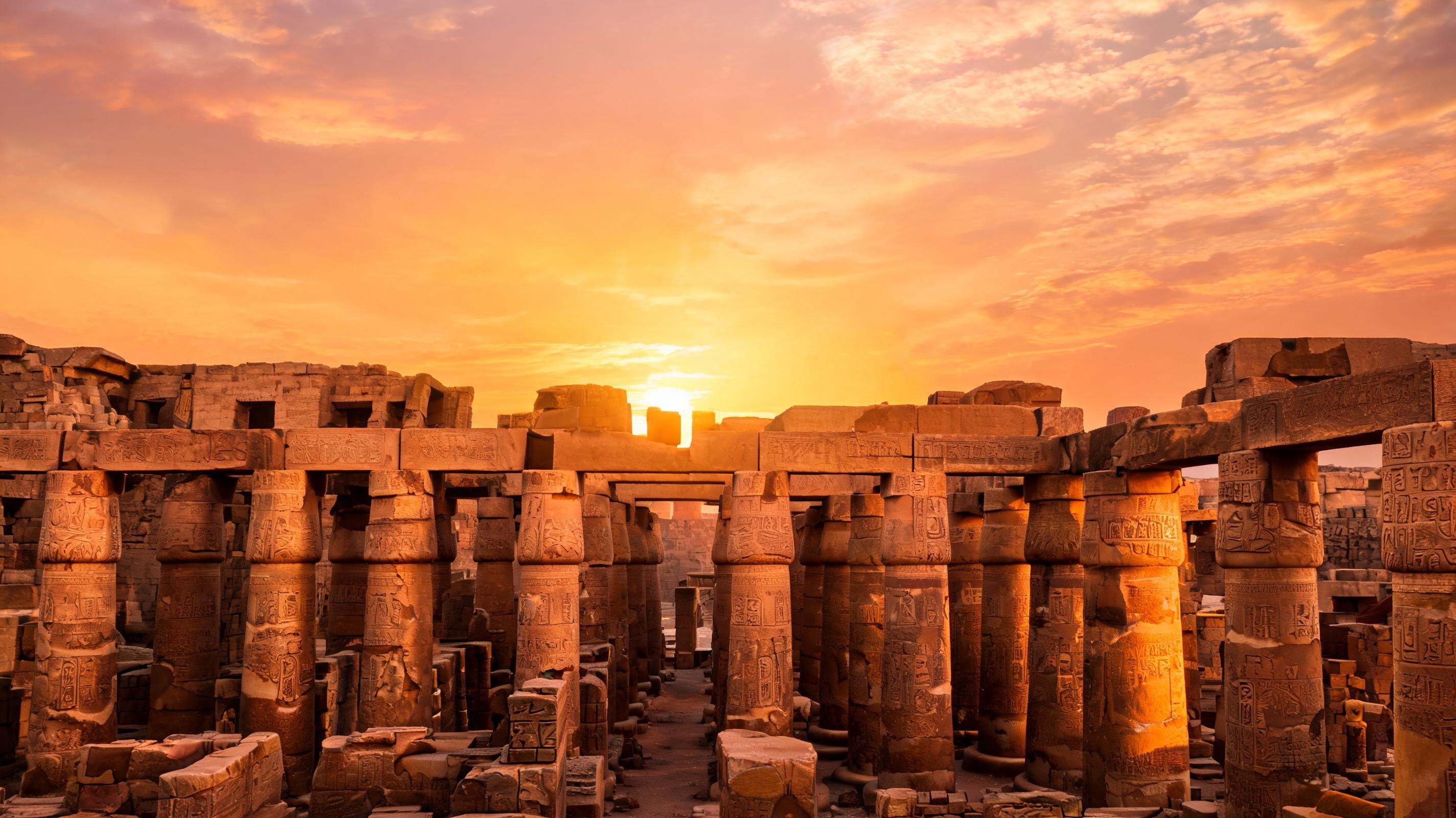
If there is one place at Karnak that stops every visitor in their tracks, it is the Great Hypostyle Hall. This is one of the most photographed, studied, and admired ancient structures on earth, and for good reason — nothing else in Egyptian architecture achieves quite this combination of scale, density, and visual power.
The Numbers
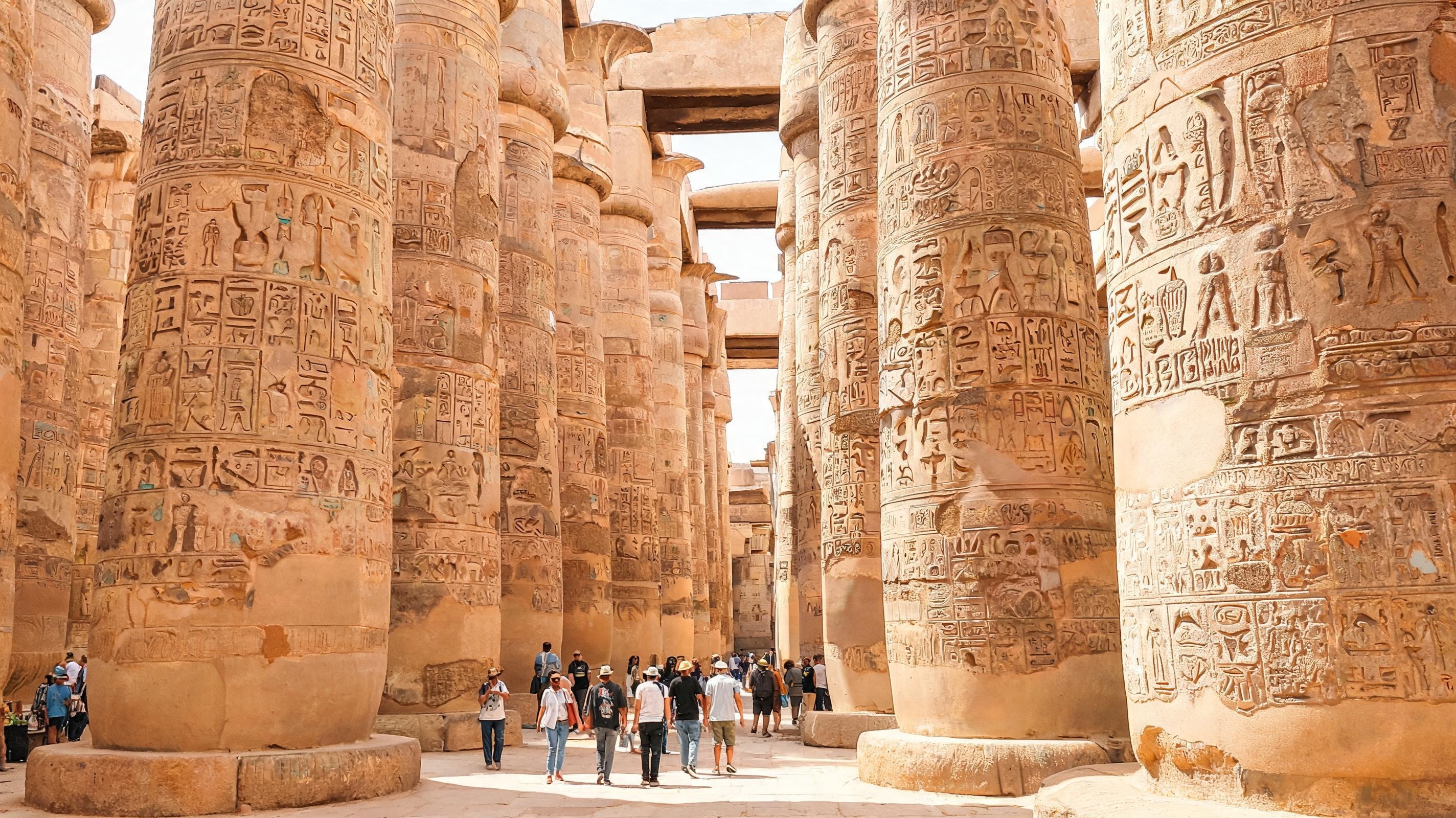
The Great Hypostyle Hall at Karnak contains 134 massive sandstone columns arranged in 16 rows within a space covering approximately 5,000 square meters — roughly the footprint of a large cathedral.
The columns are not all the same size. The 12 central columns, arranged in two rows flanking the main processional axis, are the largest. Each stands approximately 21 meters tall (about 69 feet) with a diameter of roughly 3.5 meters (over 11 feet). Their capitals are open papyrus-shaped — meant to represent fully bloomed papyrus plants. The remaining 122 side columns are smaller but still enormous at approximately 13 meters tall, with closed papyrus bud capitals.
This height difference between the central and side columns was not accidental. It created a clerestory — a raised section of roof above the central aisle with stone window grilles that allowed filtered sunlight to enter the otherwise dim interior. The effect would have been extraordinary: shafts of light falling through the upper windows onto the brightly painted columns, walls, and ceiling below, while the outer aisles remained in shadow.
Construction and Decoration
The Great Hypostyle Hall was begun under Seti I (approximately 1294–1279 BCE) and substantially completed by his son Ramesses II (approximately 1279–1213 BCE). Both pharaohs decorated extensive sections of the hall with carved reliefs — and their different artistic styles are visible to the attentive visitor.
Seti I’s reliefs, primarily on the northern half of the hall, are executed in exquisite raised relief (bas-relief), where the figures project outward from the surface. These are widely considered among the finest examples of New Kingdom craftsmanship. The carvings show the pharaoh making offerings to various gods, performing rituals, and receiving divine blessings.
Ramesses II’s reliefs, concentrated on the southern half, are mostly in sunk relief (incised relief), where the images are carved into the surface rather than raised above it. Sunk relief was faster to produce and more visible in direct sunlight — practical considerations for a pharaoh who decorated temples on an industrial scale. Ramesses II’s exterior wall reliefs include scenes from the Battle of Kadesh, his famous military engagement against the Hittites.
Imagining the Hall in Antiquity
Today, the Hypostyle Hall is an open-air ruin — the roof is gone, and the columns stand under the Egyptian sky. In ancient times, however, this space was enclosed, roofed with massive stone slabs, and painted in vivid color. The columns would have been brilliantly decorated in blues, reds, greens, and golds. The ceiling was painted dark blue with gold stars, representing the night sky. Incense smoke would have drifted through the dim interior as priests moved along the processional axis.
Walking through it today, even without the roof and the paint, remains a deeply moving experience. The sheer density of stone — column after column after column receding into the distance — creates a sensation of being inside a forest made of carved rock. It is simultaneously overwhelming and intimate.
The Pylons of Karnak: Monumental Gateways
Karnak Temple contains ten pylons — massive trapezoidal gateways that served as both architectural markers and symbolic thresholds. In Egyptian temple design, a pylon represented the horizon — the place where the sun rose between two mountains. Passing through a pylon symbolized entering a more sacred space, moving closer to the dwelling place of the god.
The pylons at Karnak are numbered from the main entrance inward (and along the secondary north-south axis), but they were not built in numerical order. The First Pylon — the enormous gateway that greets visitors today — is actually the last to be constructed, most likely dating to the 30th Dynasty (around 360 BCE), and it was never fully completed. Its rough, unfinished surfaces contrast sharply with the polished decoration elsewhere.
Despite being unfinished, the First Pylon is still imposing: approximately 113 meters wide and 43 meters tall, with walls about 15 meters thick. Remnants of the mudbrick construction ramps used during building are still visible against its inner face — a rare glimpse into ancient Egyptian construction methods.
Other notable pylons include:
- Second Pylon — leading into the Great Hypostyle Hall, built during the early 19th Dynasty
- Third Pylon — constructed by Amenhotep III, incorporating blocks from earlier structures
- Fourth Pylon — built by Thutmose I, one of the oldest surviving pylons at the site
- Seventh and Eighth Pylons — along the north-south axis, associated with Thutmose III and Hatshepsut respectively
Each pylon originally supported tall wooden flagpoles from which colorful pennants would have flown, announcing the presence of the god within.
Obelisks at Karnak Temple
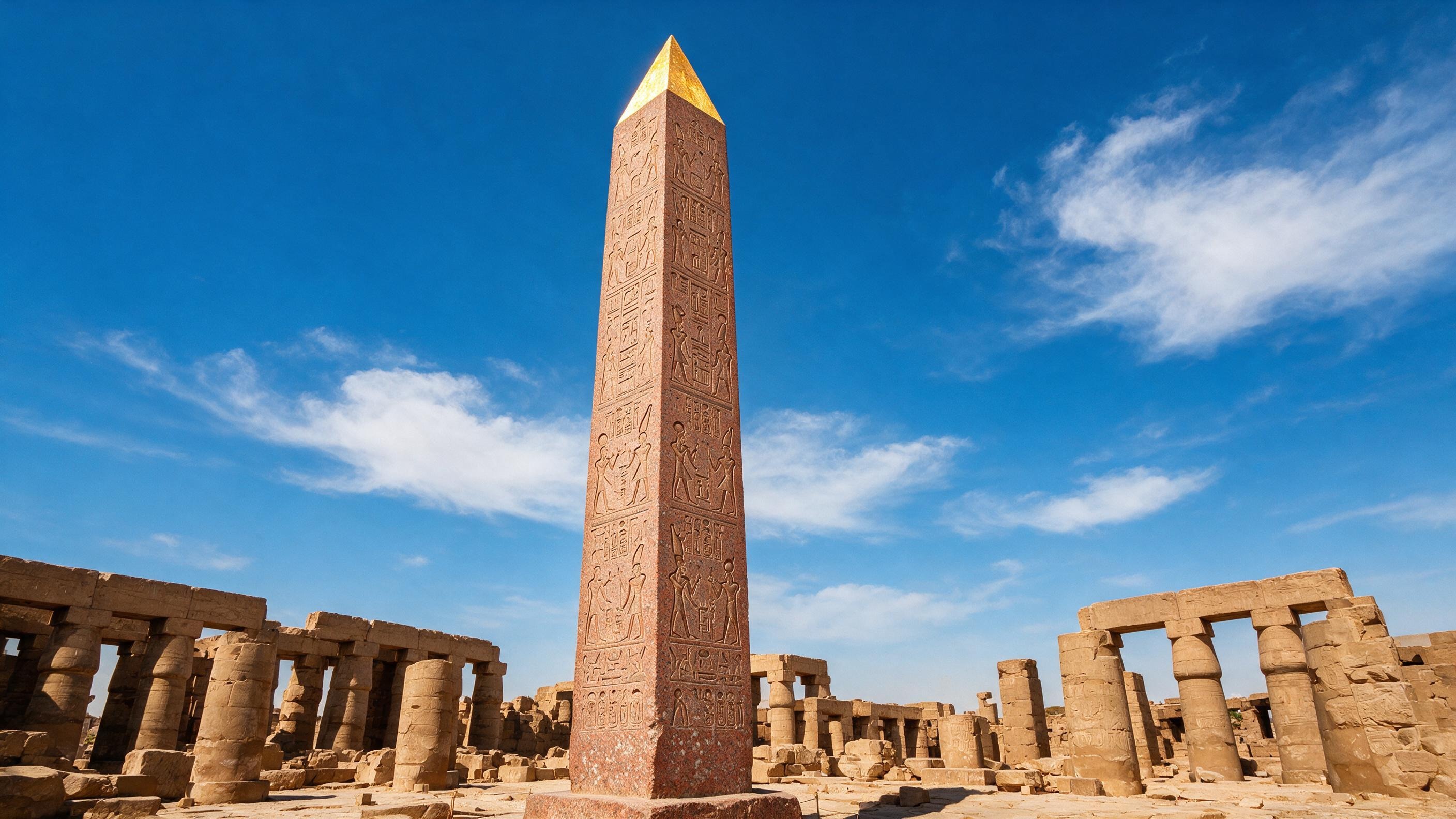
Obelisks — tall, tapering, four-sided monoliths capped with a pointed tip called a pyramidion — were among the most iconic elements of Egyptian temple architecture. They were dedicated to the sun god and placed in pairs at temple entrances. The pyramidion at the top was often covered in electrum (a gold-silver alloy) to catch the first rays of the rising sun.
Karnak originally featured numerous obelisks, though many have been removed, toppled, or broken over the centuries. Two important ones survive on site:
The Obelisk of Hatshepsut
The tallest standing obelisk at Karnak belongs to Hatshepsut. Carved from a single piece of red granite quarried at Aswan, it stands approximately 29.5 meters tall (nearly 97 feet) and weighs an estimated 323 tonnes. Inscriptions on its base describe how it was quarried, transported, and erected in just seven months — an astonishing logistical achievement, even if some scholarly debate exists around that timeline.
Hatshepsut originally erected a pair of obelisks between the Fourth and Fifth Pylons. Her successor Thutmose III later enclosed them within walls, hiding them from view but — notably — not destroying them. One has fallen and is broken; the other stands intact and remains one of the most impressive single monuments in all of Egypt.
The Obelisk of Thutmose I
Closer to the temple’s core stands an obelisk erected by Thutmose I, Hatshepsut’s father. Smaller than his daughter’s monument but still substantial at approximately 20 meters tall, this obelisk is one of the oldest surviving structures in the central part of Karnak.
The Sacred Lake at Karnak
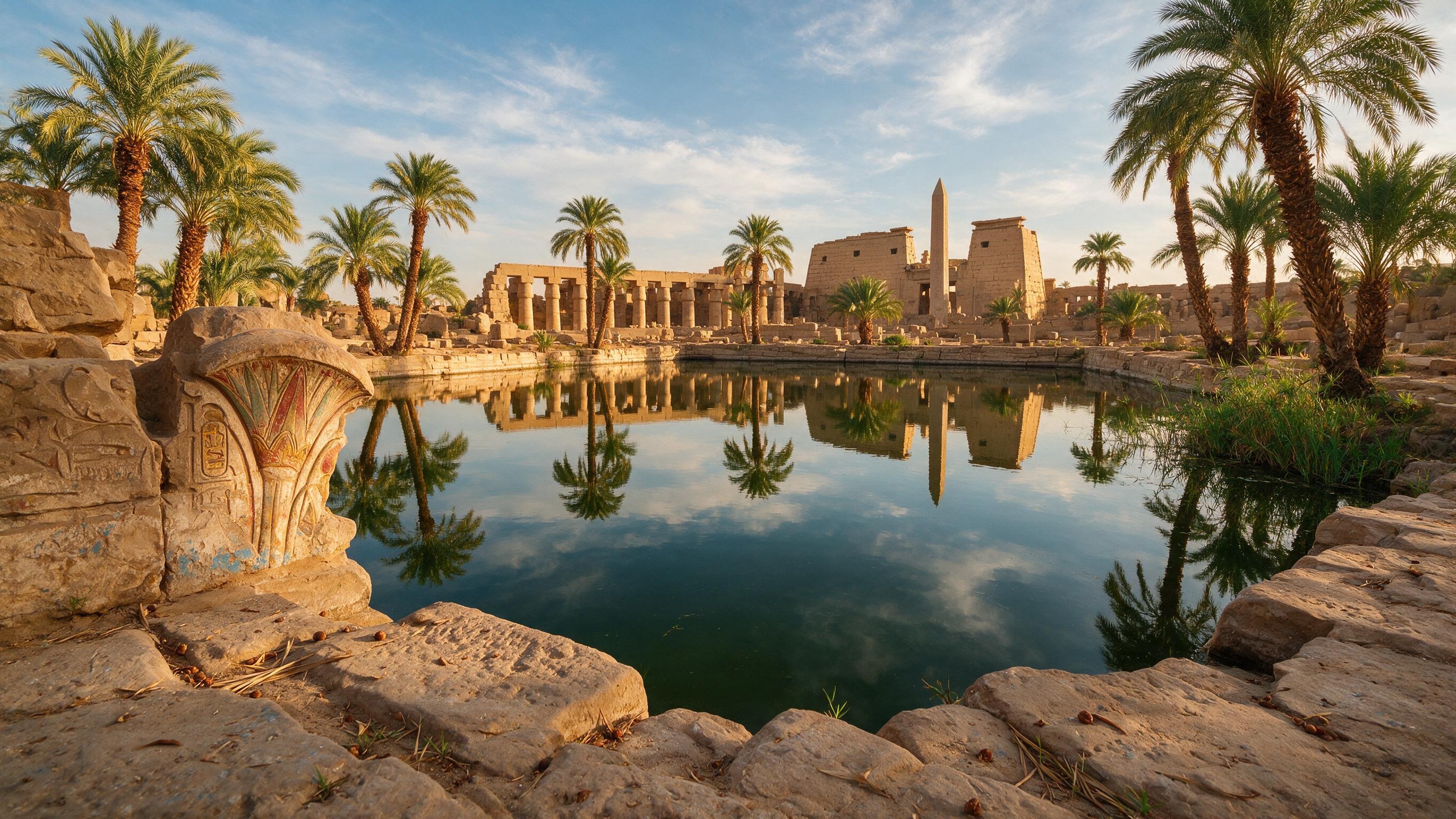
South of the main temple buildings lies the Sacred Lake — a large, rectangular, stone-lined pool measuring approximately 120 meters by 77 meters. It is the largest surviving sacred lake associated with any Egyptian temple.
The lake served several important functions in the religious life of the temple:
- Ritual purification: Priests were required to bathe in the lake before performing ceremonies. Ritual purity was essential — priests shaved their entire bodies and bathed multiple times a day.
- Sacred geese: Geese sacred to Amun were kept on the lake.
- Symbolic function: The lake represented Nun — the primordial waters of chaos from which creation emerged in Egyptian mythology. Its presence within the temple symbolized the moment of creation itself.
- Ritual navigation: During certain festivals, sacred barques (model boats carrying divine statues) were floated on the lake.
Today, the Sacred Lake is still filled with water and is a peaceful place to pause during a visit. A large granite scarab statue — dedicated by Amenhotep III to the god Khepri (the morning sun) — sits near the lake’s edge. A popular local tradition holds that walking around the scarab a certain number of times brings good luck, though this is modern folklore rather than ancient practice.
Statues and Reliefs: Reading the Walls of Karnak
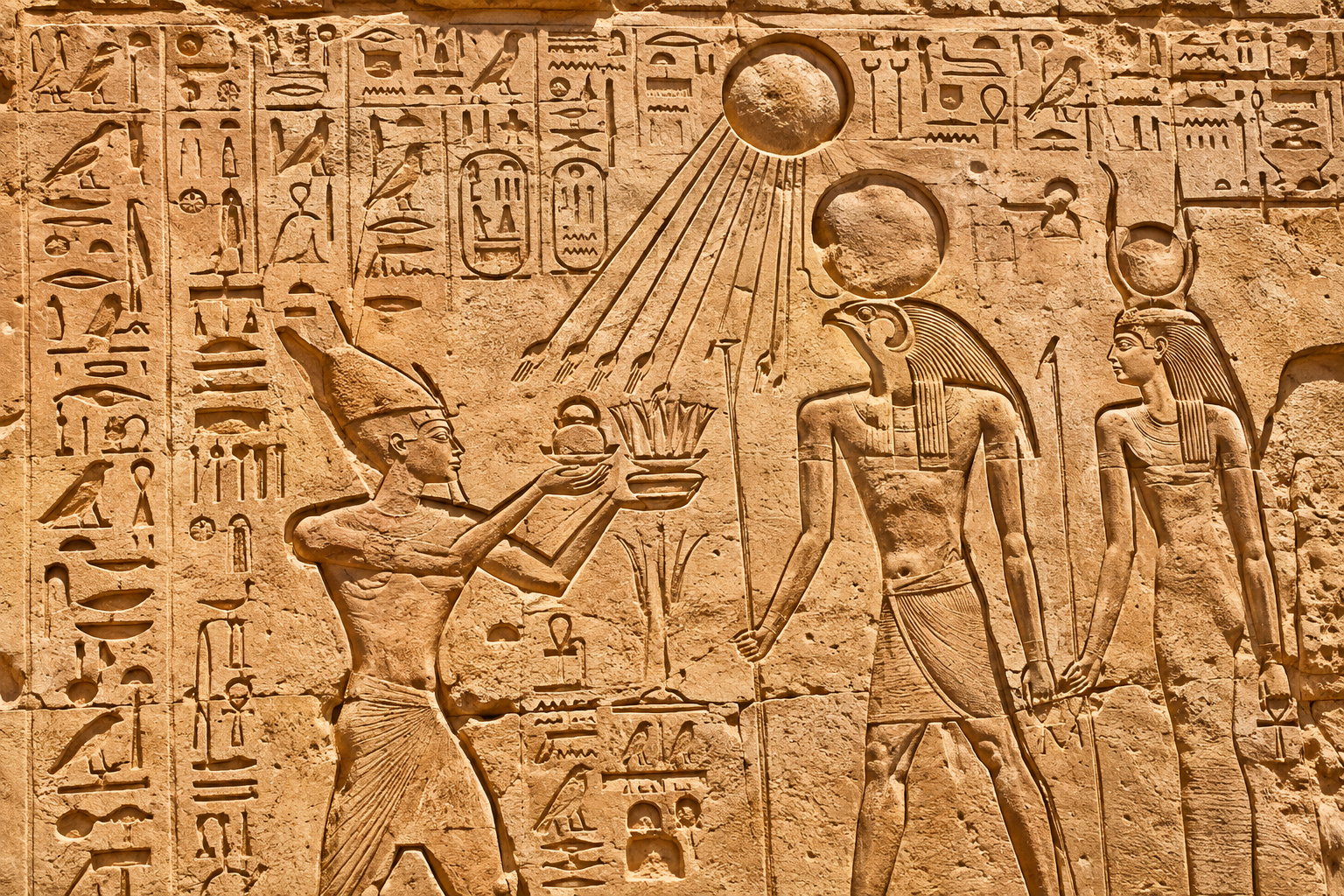
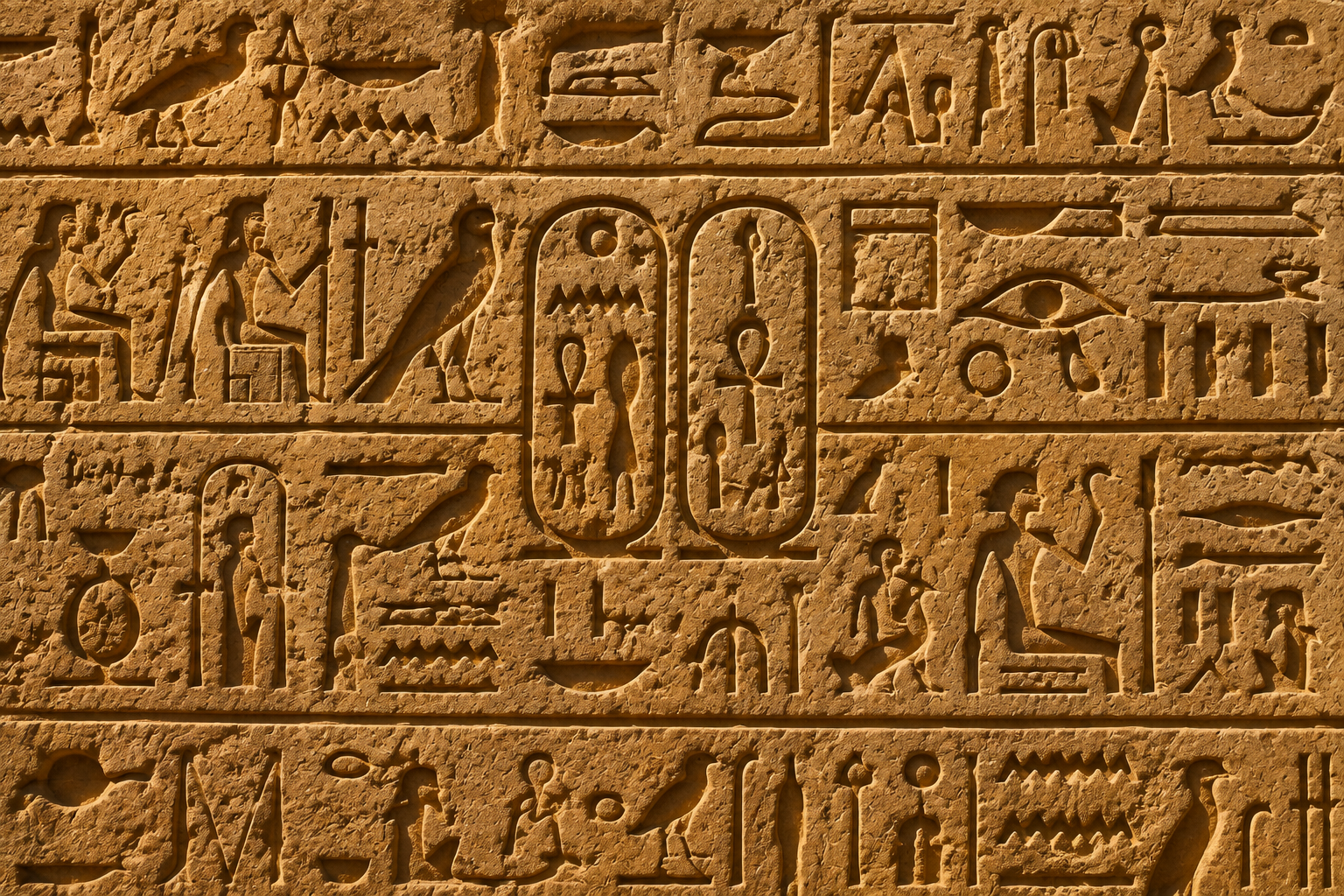
Almost every surface at Karnak carries carved decoration. Walls, columns, lintels, door jambs, and even the undersides of stone architraves are covered with hieroglyphic texts and pictorial reliefs. For visitors willing to look closely, these carvings offer an extraordinary window into ancient Egyptian religion, politics, and daily ritual.
What the Reliefs Show
Common scenes at Karnak include:
- Offering scenes: The pharaoh presenting food, drink, incense, flowers, or other offerings to Amun-Ra, Mut, Khonsu, and other gods
- Coronation and divine birth narratives: Scenes establishing the pharaoh’s legitimacy as a divinely chosen ruler
- Military campaigns: Thutmose III’s Annals, Seti I’s battles in Syria and Palestine, Ramesses II’s Battle of Kadesh, Ramesses III’s campaigns against the Sea Peoples
- Festival processions: Depictions of the Opet Festival and other ceremonies
- Ritual actions: Priests carrying sacred barques, performing purification rites, or opening the doors of the shrine
Statues
Karnak is also rich in statuary. Colossal standing and seated statues of pharaohs guard doorways and courtyards. In the first courtyard, a large standing statue of Ramesses II — with a smaller figure of his queen Nefertari at his feet — greets visitors. Osiride pillars (pillars with attached statues of the pharaoh in the pose of Osiris) line several courtyards. In 1903, archaeologists discovered a massive cache of over 7,000 stone statues and bronze figurines buried in a courtyard north of the Seventh Pylon — known as the Karnak Cachette — many of which are now displayed in the Egyptian Museum in Cairo and the Luxor Museum.
The Avenue of Sphinxes: Connecting Karnak and Luxor Temple
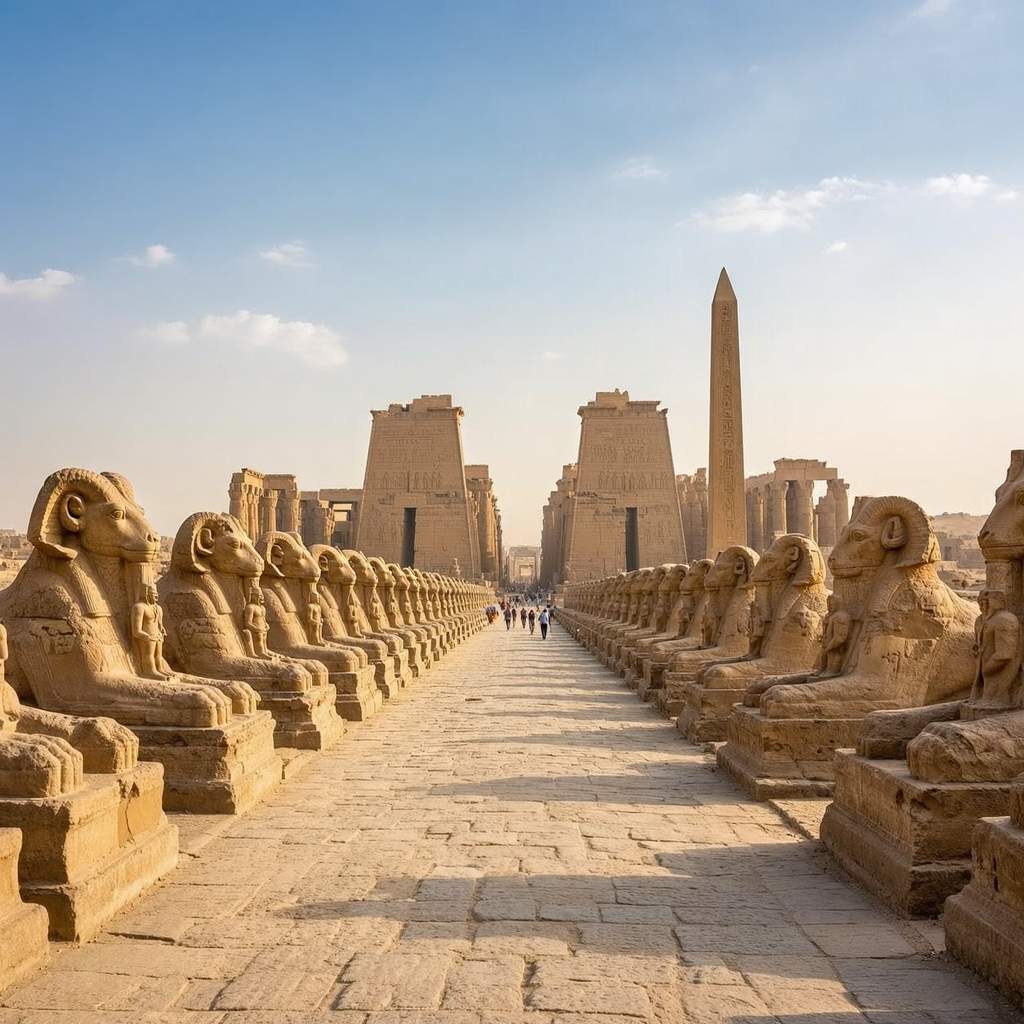
In ancient Thebes, Karnak Temple and Luxor Temple were linked by a grand processional avenue approximately 2.7 kilometers long, lined on both sides with sphinx statues. This road — known in ancient times as Wat Nefer (“the Beautiful Path”) — was the route along which sacred processions traveled during major festivals, most notably the Opet Festival.
The sphinxes at the Karnak end are ram-headed, representing Amun, with small statues of the pharaoh sheltered between their front legs. Toward the Luxor Temple end, the sphinxes have human heads. The avenue was originally constructed and embellished by several pharaohs, including Amenhotep III and Nectanebo I.
After centuries buried beneath the streets and buildings of modern Luxor, the Avenue of Sphinxes was partially restored and reopened in a much-publicized ceremony in 2021. While not all sphinxes survive, visitors can now walk along significant portions of this ancient road, experiencing something of the processional route that connected Egypt’s two great east-bank temples.
Hatshepsut at Karnak: A Pharaoh’s Legacy in Stone
Hatshepsut (reigning approximately 1473–1458 BCE) is one of the most fascinating figures in Egyptian history — a woman who assumed the full titles and regalia of a pharaoh and ruled Egypt during one of its most prosperous periods. Her contributions to Karnak Temple were substantial and enduring.
Beyond her towering obelisks, Hatshepsut constructed the Red Chapel (Chapelle Rouge), a barque shrine made of red quartzite and black diorite that served as a resting station for the sacred barque of Amun during festival processions. The chapel was later dismantled — its blocks were found reused in the Third Pylon — but it has been carefully reassembled and is now displayed in the Open Air Museum at Karnak. Its reliefs are among the most beautifully carved at the site, showing Hatshepsut performing rituals, making offerings, and participating in the Opet Festival.
Hatshepsut also built a suite of chambers around the central sanctuary and commissioned numerous statues. Her relationship with Karnak was deeply personal: her inscriptions describe a mystical bond with Amun, and she claimed divine parentage — that Amun himself had fathered her.
After her death, some of her images and cartouches at Karnak were defaced or covered by her successor, Thutmose III. For many years, this was interpreted as an act of revenge, but modern scholarship tends toward a more nuanced reading — the erasures appear to have occurred late in Thutmose III’s reign and may have been motivated by political or theological concerns about succession rather than personal animosity. Regardless of the reasons, enough of Hatshepsut’s work survives at Karnak to testify to the ambition and artistry of her reign.
Thutmose III: The Warrior Pharaoh at Karnak
Thutmose III (reigning approximately 1458–1425 BCE) is sometimes called the “Napoleon of Egypt” — a comparison that, while anachronistic, captures something of his military reputation. He conducted at least 17 military campaigns in the Near East, extending Egypt’s borders further than any pharaoh before him. Karnak was where he recorded these triumphs for eternity.
The Annals of Thutmose III, carved on the walls surrounding the sanctuary area, provide detailed accounts of his campaigns, including lists of captured cities, tribute received, and plunder taken. The account of the Battle of Megiddo — where Thutmose III defeated a coalition of Canaanite rulers — is one of the earliest detailed military narratives in history.
Thutmose III also built the Akh-Menu (Festival Hall), a unique structure east of the main sanctuary. Its columns, unusually, are shaped like tent poles — perhaps deliberately evoking a military campaign tent. A small room within the Akh-Menu contains the famous Botanical Garden reliefs, depicting exotic plants and animals that Thutmose III brought back from his campaigns in Syria. This is one of the earliest known attempts at botanical and zoological illustration.
Akhenaten and Karnak: The Heretic Pharaoh
One of the most dramatic chapters in Karnak’s history involves Akhenaten (originally Amenhotep IV, reigning approximately 1353–1336 BCE), who attempted a religious revolution that shook Egyptian civilization to its core.
Early in his reign — before he moved his capital to the new city of Akhetaten (modern Amarna) — Akhenaten constructed several temples to the Aten (the sun disc) within the Karnak complex itself. These Aten temples were radically different from traditional Egyptian temple architecture: they were open to the sky, allowing sunlight to flood the ritual spaces, reflecting the Aten’s nature as a visible solar deity.
After Akhenaten’s death and the restoration of traditional religion under Tutankhamun and later rulers, his Aten temples at Karnak were systematically demolished. The stone blocks — known as talatat (small, standardized blocks that Akhenaten favored for rapid construction) — were broken up and reused as fill inside later pylons. Thousands of these talatat blocks have been recovered by archaeologists, and their carved surfaces provide invaluable evidence about Akhenaten’s art, religion, and building program.
The erasure of Akhenaten’s name and images from Karnak was thorough but not entirely successful. His ghost haunts the complex — embedded in the foundations of the very pylons his successors built to replace his temples.
Seti I and Ramesses II: Builders of the Hypostyle Hall
Seti I (approximately 1294–1279 BCE) and Ramesses II (approximately 1279–1213 BCE) of the 19th Dynasty were the father-son team responsible for Karnak’s single most famous feature: the Great Hypostyle Hall.
Seti I initiated the project and oversaw the decoration of the northern half of the hall. His raised reliefs are masterpieces of Egyptian art — detailed, elegant, and carved with extraordinary precision. On the exterior northern wall, Seti I recorded his military campaigns in Syria and Palestine, including the capture of the fortress of Kadesh and battles against the Shasu Bedouin.
Ramesses II completed the hall and decorated the southern half, along with the exterior southern wall, where his own version of the Battle of Kadesh — fought against the Hittite Empire in approximately 1274 BCE — is depicted in dramatic detail. Ramesses II also added the Second Pylon, numerous colossal statues, and inscriptions throughout the complex. His building activity at Karnak was so extensive that his cartouches appear on more surfaces than those of any other pharaoh.
Ramesses I, who founded the 19th Dynasty but reigned for only about two years, also has a small chapel at Karnak, though his contributions were necessarily modest given his brief time on the throne.
Karnak Temple Architecture: Symbolism in Stone
Egyptian temple architecture was never purely functional. Every element carried symbolic meaning, and the design of a temple like Karnak was intended to replicate the structure of the universe as the Egyptians understood it.
The Temple as Cosmos
An Egyptian temple was designed as a model of creation:
- The floor gradually rose as one moved from the entrance toward the sanctuary, symbolizing the primordial mound that emerged from the waters of chaos at the moment of creation.
- The ceiling gradually lowered, creating increasingly compressed, darker spaces as one approached the innermost shrine.
- Ceilings were painted with stars — the sky above the world.
- Columns were carved as plants — papyrus, lotus, and palm — representing the vegetation of the marshes that surrounded the mound of creation.
- The lower walls were often decorated with marsh plants and Nile scenes, reinforcing the connection to the primeval landscape.
- The sanctuary, at the deepest and darkest point, was the holiest space — where the cult statue of the god resided in near-total darkness, recreating the conditions before the sun first rose.
Key Architectural Elements
| Element | Description | Symbolic Meaning |
|---|---|---|
| Pylon | Massive trapezoidal gateway | The horizon — the two mountains between which the sun rises |
| Courtyard | Open area beyond the pylon | Transitional space between the human world and the divine realm |
| Hypostyle Hall | Columned hall, often roofed | The primordial marsh — a forest of stone plants around the mound of creation |
| Obelisk | Tall, pointed monolith | Petrified ray of sunlight; connection between earth and the sun god |
| Sanctuary | Innermost chamber housing the cult statue | The dwelling place of the god; the primordial darkness before creation |
| Sacred Lake | Rectangular stone-lined pool | The waters of Nun — the primordial ocean of chaos |
Hieroglyphs and Inscriptions: Karnak’s Written Record
Karnak is one of the most text-rich archaeological sites in the world. Virtually every surface carries hieroglyphic inscriptions — some monumental and deeply carved, others delicate and painted. These texts serve many functions:
- Royal titulary: The five-fold names and titles of pharaohs, establishing their identity and divine authority
- Offering formulae: Standardized prayers requesting eternal sustenance for the king or the god
- Military annals: Detailed campaign records, especially those of Thutmose III, Seti I, Ramesses II, and Ramesses III
- Treaty records: The Egyptian-Hittite peace treaty following the Battle of Kadesh is recorded at Karnak
- Temple inventories: Lists of offerings, goods, and estates dedicated to the temple
- Theological texts: Hymns to Amun-Ra, mythological narratives, and ritual instructions
For visitors who do not read hieroglyphs, a knowledgeable guide can bring these inscriptions to life, explaining the stories and identifying the gods and pharaohs represented. Even without expert interpretation, the sheer volume and beauty of the carved text creates a powerful impression.
Religion and Mythology at Karnak
The religious world represented at Karnak was complex, layered, and deeply intertwined with the political life of the Egyptian state.
Amun-Ra stood at the center of everything. He was the “hidden one” whose true form could not be seen, yet who was identified with the sun’s creative power. As king of the gods, he was the divine patron of the pharaoh and the guarantor of cosmic order.
Mut, his consort, was a powerful goddess in her own right — associated with motherhood, queenship, and the fierce protective power of the lioness. Her temple precinct south of the main complex contained hundreds of statues of the lion-headed goddess Sekhmet, many of which survive.
Khonsu, their divine son, was the moon god, associated with healing and the passage of time. His temple within the Karnak complex, built primarily by Ramesses III, is one of the best-preserved structures on the site.
Other deities also had chapels and representations at Karnak, including Osiris (god of the dead and resurrection), Ptah (creator god of Memphis, whose small temple at Karnak is worth seeking out), and Khepri (the morning sun, represented by the scarab beetle).
The mythology embedded in Karnak’s architecture reflects the Egyptian concept of Ma’at — the cosmic order of truth, justice, and balance. The pharaoh’s primary religious duty was to maintain Ma’at through proper worship, offerings, and temple construction. Karnak was the physical embodiment of that duty.
The Opet Festival: Karnak’s Greatest Celebration
The most important annual festival at ancient Thebes was the Opet Festival, which connected Karnak Temple directly to Luxor Temple through a spectacular religious procession.
During the Opet Festival, the cult statues of Amun, Mut, and Khonsu were removed from their shrines at Karnak, placed in sacred barques (ornamental boat-shaped shrines), and carried in a grand procession along the Avenue of Sphinxes to Luxor Temple — or, alternatively, transported by barge along the Nile. At Luxor Temple, the god Amun was believed to visit his “Southern Harem” and renew his creative power. The pharaoh also participated in the festival, and the ceremony symbolically renewed the king’s divine authority and his connection with Amun.
The Opet Festival lasted between 11 and 27 days, depending on the historical period, and was accompanied by feasting, music, dancing, and public celebrations. Reliefs depicting the Opet procession can be seen at both Karnak and Luxor Temple — and at the Red Chapel of Hatshepsut in Karnak’s Open Air Museum.
Karnak Temple and Ancient Thebes
To understand Karnak fully, it helps to understand the city it served. Ancient Thebes (known to the Egyptians as Waset) was one of the most important cities in the ancient world. During the New Kingdom, it functioned as Egypt’s religious capital and, for much of that period, its political capital as well.
The city’s rise was closely linked to the rise of Amun. When the Theban rulers of the 11th Dynasty reunified Egypt after the First Intermediate Period, they brought their local god with them. As Thebes grew in power, Amun grew in stature — eventually absorbing aspects of the sun god Ra and becoming Amun-Ra, supreme deity of the empire. Karnak grew accordingly, from a modest Middle Kingdom shrine to the largest and wealthiest temple complex in the country.
The Greek poet Homer referred to the city as “hundred-gated Thebes” — a reference not to city gates but to the monumental pylons of its temples. The name the ancient Egyptians used for the Karnak complex itself was Ipet-Isut, meaning “The Most Select of Places.”
Discovery, Excavation, and Conservation
Karnak was never truly “lost” — local inhabitants always knew the ruins were there, and European travelers began visiting and describing the site from the 17th century onward. Systematic archaeological work began in the 19th century and has continued, in various forms, ever since.
Major excavation and restoration efforts have been carried out by French, Egyptian, and international teams. The Centre Franco-Égyptien d’Étude des Temples de Karnak (CFEETK), a joint French-Egyptian project, has been responsible for much of the scholarly documentation, restoration, and publication of the complex since the late 20th century. Their work has included anastylosis (reassembling collapsed structures from original blocks), cleaning and conservation of reliefs, and careful archaeological excavation.
The challenges of preserving Karnak are immense. Salt crystallization within the sandstone, rising groundwater, tourism-related wear, and the sheer scale of the site all pose ongoing threats. Earthquake damage — ancient and modern — has also taken its toll. The famous fall of columns in the Hypostyle Hall (some columns collapsed in an earthquake, possibly in the first millennium BCE) required complex modern restoration.
Conservation is a continuous process. Parts of the site are periodically closed for restoration work, and visitors may notice scaffolding or protective barriers in certain areas — evidence of the ongoing effort to preserve these monuments for future generations.
What Is It Like to Visit Karnak Temple Today?
Arriving at Karnak, you first pass through a modern visitor center and ticket area, then walk along a path toward the complex entrance. The approach is designed to build anticipation — and it works.
You reach the Avenue of Sphinxes first: a double row of ram-headed sphinxes guarding the processional way toward the First Pylon. Even before entering the temple, the scale is impressive. The sphinxes are not small decorative objects; they are substantial stone sculptures, each several meters long, sitting on carved pedestals.
Then the First Pylon looms ahead — a wall of stone so large it almost doesn’t register as a single structure. You walk through the massive gateway into the First Courtyard, an open space surrounded by colonnades, with the temple of Ramesses III on your right and the remains of a large kiosk in the center.
Beyond the Second Pylon, you enter the Great Hypostyle Hall, and this is where most visitors simply stop and stare. The density of columns is almost disorienting. You can spend twenty minutes just wandering among them, tilting your head back to look at the carved capitals, running your fingers along (but not touching!) the deeply cut hieroglyphs, and watching how the sunlight moves through the columns at different angles.
Continuing deeper into the complex, you pass the remaining pylons, see Hatshepsut’s obelisk towering above the walls, explore the ruined inner chambers, and eventually emerge near the Sacred Lake, where the pace naturally slows. There are benches, and many visitors take a break here, looking out over the water with the temple structures rising behind them.
The Open Air Museum (requiring a separate ticket) is worth the detour if you have time. It contains carefully reassembled structures — including the White Chapel of Senusret I and the Red Chapel of Hatshepsut — that show some of the finest carving at the site.
The atmosphere at Karnak varies dramatically depending on when you visit. Early morning brings soft golden light, fewer crowds, and relatively cooler temperatures. Midday can be brutally hot, with the sun beating down on exposed stone. Late afternoon brings warm, angled light that is ideal for photography and creates dramatic shadows among the columns.
Most visitors spend two to three hours at Karnak. You could spend much longer if you are interested in Egyptology or photography.
How Long Do You Need at Karnak Temple?
| Visit Type | Recommended Time | What You’ll Cover |
|---|---|---|
| Quick overview | 1.5–2 hours | Main axis: Avenue of Sphinxes, Hypostyle Hall, obelisks, Sacred Lake |
| Standard visit | 2.5–3.5 hours | Main axis plus side areas, temple of Khonsu, Ptah temple, more detailed exploration |
| In-depth / photography | 4–5+ hours | Full complex including Open Air Museum, secondary areas, detailed relief study, photography at different light angles |
If you are visiting on a day trip from Hurghada or as part of a guided Luxor tour, your time may be more limited. Discuss timing with your guide to ensure you have enough time for the key highlights.
Best Time to Visit Karnak Temple
Time of Day
- Early morning (opening time): The best option for most visitors. Temperatures are lower, crowds are smaller, and the morning light is beautiful for photography. The stone still holds some of the night’s coolness.
- Late afternoon (2–3 hours before closing): Excellent warm light for photography, especially in the Hypostyle Hall. Crowds thin toward closing time. However, summer afternoons can still be very hot.
- Midday: Best avoided if possible, particularly from April through October, when temperatures in Luxor can exceed 40°C (104°F). The exposed stone amplifies the heat, and shade is limited in many areas.
Season
- October to March: The most comfortable months. Daytime temperatures are pleasant (typically 20–30°C / 68–86°F), and mornings and evenings can be cool.
- April to September: Very hot. Visits are still possible — and the site is less crowded — but you must plan around the heat, bring plenty of water, wear a hat, and use sunscreen.
Karnak Sound and Light Show
Karnak Temple hosts an evening Sound and Light Show that takes visitors on a narrated walk through the illuminated complex, culminating at the Sacred Lake. The show covers the history and mythology of the temple using dramatic lighting, music, and narration. It is available in several languages. While not a substitute for visiting during daylight — the reliefs and architectural details are much better seen in natural light — the Sound and Light Show offers an atmospheric and enjoyable evening experience. Check locally for current schedules and showtimes.
Karnak Temple Tickets and Visitor Information
Important note: Ticket prices, opening hours, and site regulations in Egypt are subject to change. The information below is provided as general guidance. Always check the latest official information — through the Egyptian Ministry of Tourism and Antiquities, your tour operator, or your hotel — before visiting.
- Tickets: Available at the entrance. A standard ticket covers the main Precinct of Amun-Ra. The Open Air Museum requires a separate ticket. Photography tickets were previously required but policies may have changed.
- Opening hours: Karnak typically opens early in the morning and closes in the late afternoon or early evening. Hours may vary by season.
- Guides: Licensed Egyptologist guides are available for hire at the entrance, and many tours include a guide. Having a knowledgeable guide significantly enhances the experience.
- Facilities: There is a visitor center, a small café area, toilets, and souvenir shops near the entrance. Water is available for purchase, but bringing your own is advisable.
How to Get to Karnak Temple
Karnak Temple is easily accessible from various starting points in and around Luxor:
- From Luxor city center: Karnak is approximately 3 km northeast of the city center. A taxi ride takes 10–15 minutes. Many hotels can arrange a car. Walking is possible but not recommended in hot weather.
- From Luxor hotels (east bank): Most east-bank hotels can arrange taxi or minibus transport directly to the temple. Horse-drawn carriages (calèches) are also available, though agree on a price before departing.
- From Nile cruise ships: Most cruise ships dock near Luxor Temple. Karnak is a short taxi or minibus ride from the cruise terminal. Organized excursions are typically included in Nile cruise itineraries.
- From the West Bank: If you are visiting west-bank sites such as the Valley of the Kings or Hatshepsut Temple, you will need to cross the Nile by bridge or local ferry, then take a taxi to Karnak. Many day tours combine east-bank and west-bank sites.
- From Luxor Airport: The airport is approximately 8 km from Karnak. A taxi takes about 20 minutes.
- From Hurghada: Karnak is a popular destination for day trips from Hurghada, approximately 280 km away. The journey takes about 3.5–4 hours by road. Organized tours typically include transport, a guide, and visits to multiple Luxor sites.
Karnak Temple vs. Luxor Temple: Understanding the Differences
Visitors often wonder whether they need to see both Karnak and Luxor Temple, or whether one is enough. The short answer: they are very different experiences, and ideally, you should visit both.
| Feature | Karnak Temple | Luxor Temple |
|---|---|---|
| Size | Enormous complex — 100+ hectares | Much smaller, more compact |
| Primary deity | Amun-Ra (main residence) | Amun (southern sanctuary) |
| Construction period | ~2,000 years, many pharaohs | Primarily Amenhotep III and Ramesses II |
| Key feature | Great Hypostyle Hall | Colonnade of Amenhotep III, court of Ramesses II |
| Visit time | 2–4 hours | 1–2 hours |
| Location | Northern edge of Luxor | Central Luxor, on the Corniche |
| Evening visit | Sound and Light Show | Beautifully illuminated at night |
| Connection | Linked by the Avenue of Sphinxes and the annual Opet Festival procession | |
Karnak overwhelms with its scale and complexity. Luxor Temple, especially when illuminated at night, offers a more intimate and architecturally unified experience. Together, they tell a much more complete story of Theban religion and royal power.
Karnak Temple and Other Luxor Attractions
Karnak fits naturally into a broader exploration of Luxor’s archaeological treasures. Here are some common combinations:
- Full-day Luxor East Bank: Karnak Temple + Luxor Temple + Avenue of Sphinxes + Luxor Museum
- Full-day Luxor West Bank: Valley of the Kings + Hatshepsut Temple + Colossi of Memnon + Medinet Habu
- Two-day Luxor itinerary: One day for the east bank (Karnak + Luxor Temple), one day for the west bank
- Day trip from Hurghada: Most Luxor day trips from Hurghada include Karnak Temple alongside west-bank highlights
- Nile cruise itinerary: Karnak is a standard stop on most Luxor–Aswan Nile cruises
If you only have one day in Luxor and must choose between Karnak and western bank sites, the answer is: don’t choose. A well-organized day can include both, though you’ll want to start early and prioritize.
Interesting Facts About Karnak Temple
- Karnak Temple covers more than 100 hectares — large enough to contain several European cathedrals within its walls.
- The ancient Egyptian name for Karnak was Ipet-Isut, meaning “The Most Select of Places.”
- Construction at the site spanned approximately 2,000 years, from the Middle Kingdom through the Ptolemaic period.
- The Great Hypostyle Hall’s 134 columns occupy roughly 5,000 square meters — about half the area of a professional football pitch.
- Hatshepsut’s surviving obelisk is approximately 29.5 meters tall and weighs an estimated 323 tonnes.
- The Karnak Cachette, discovered in 1903, contained more than 7,000 stone statues and bronze figurines buried in a single courtyard.
- The Sacred Lake is the largest sacred lake associated with any surviving Egyptian temple.
- More than 30 pharaohs contributed to the construction and decoration of the complex.
- The Hypostyle Hall was originally roofed and painted in brilliant colors — visitors today see only the bare stone skeleton.
- The Avenue of Sphinxes connecting Karnak to Luxor Temple was approximately 2.7 km long and lined with hundreds of sphinx statues.
- An early Christian church was built inside the Hypostyle Hall during the Roman period — its traces are still visible on some columns.
- The remains of mudbrick construction ramps used to build the First Pylon can still be seen leaning against its inner face.
- The Botanical Garden reliefs in Thutmose III’s Festival Hall are among the earliest known attempts to systematically depict exotic flora and fauna.
- Karnak’s temple estates at their peak may have employed tens of thousands of workers and controlled vast agricultural land across Egypt.
Common Mistakes Visitors Make at Karnak Temple
Even experienced travelers sometimes approach Karnak in ways that reduce their enjoyment. Here are the most common mistakes — and how to avoid them:
- Arriving at midday in summer: Temperatures in Luxor regularly exceed 40°C. The temple has little shade. Visit early morning or late afternoon.
- Rushing through the complex: Karnak deserves at least two hours, ideally three or more. Don’t treat it as a quick photo stop.
- Ignoring the smaller structures: Everyone sees the Hypostyle Hall, but the temple of Khonsu, the Ptah temple, and the Open Air Museum are also fascinating and much less crowded.
- Skipping a guide: Karnak’s reliefs and inscriptions tell extraordinary stories that are invisible without context. A qualified Egyptologist guide transforms the visit.
- Not bringing water: You will walk a lot in open sunlight. Dehydration is a real risk, especially in warmer months.
- Underestimating the site’s size: Karnak is not one building. It is a vast complex. Wear comfortable walking shoes, not sandals or dress shoes.
- Touching the reliefs: Oils from human hands damage ancient stone. Look closely, but please do not touch the carved surfaces.
- Forgetting the Open Air Museum: This requires a separate ticket and is often overlooked. The White Chapel and Red Chapel inside are among the finest carvings at Karnak.
- Not looking up: The architraves, column capitals, and remaining ceiling fragments above often contain beautifully preserved painted decoration that ground-level visitors miss entirely.
Frequently Asked Questions About Karnak Temple
What is Karnak Temple famous for?
Karnak Temple is famous for being one of the largest ancient religious complexes in the world. It is particularly renowned for the Great Hypostyle Hall — a forest of 134 massive carved columns — as well as its obelisks, pylons, sacred lake, and thousands of square meters of hieroglyphic inscriptions and relief carvings. It was the principal temple of the god Amun-Ra and the most important religious site in ancient Egypt during the New Kingdom.
How old is Karnak Temple?
The oldest surviving structures at Karnak date to approximately 3,900 years ago, from the Middle Kingdom reign of Senusret I (around 1950 BCE). However, the majority of the visible structures date to the New Kingdom (approximately 1550–1070 BCE). Construction continued through the Ptolemaic period, meaning the complex developed over roughly 2,000 years.
Who built Karnak Temple?
No single pharaoh built Karnak. More than 30 Egyptian rulers contributed to its construction and decoration over approximately two millennia. Major builders include Senusret I, Hatshepsut, Thutmose I, Thutmose III, Amenhotep III, Seti I, Ramesses II, and Ramesses III, along with numerous later rulers through the Ptolemaic period.
How long does it take to visit Karnak Temple?
A focused visit to the main highlights takes approximately 1.5–2 hours. A more thorough visit, including side temples and the Sacred Lake, takes 2.5–3.5 hours. History and photography enthusiasts may want 4–5 hours or more, especially if visiting the Open Air Museum.
Is Karnak Temple worth visiting?
Absolutely. Karnak is consistently rated as one of the most impressive archaeological sites in the world. Its scale, artistry, and historical significance make it an essential visit for anyone traveling to Luxor or Upper Egypt. Many travelers consider it the single most memorable ancient site they visit in Egypt.
What is the Great Hypostyle Hall?
The Great Hypostyle Hall is a vast columned hall within the Karnak complex, containing 134 massive sandstone columns arranged in 16 rows. The 12 central columns stand approximately 21 meters tall with open papyrus capitals. Built primarily by Seti I and Ramesses II during the 19th Dynasty, it is one of the most iconic architectural spaces in the ancient world.
How many columns are in the Hypostyle Hall at Karnak?
There are 134 columns in the Great Hypostyle Hall. The 12 central columns are the tallest at about 21 meters, while the remaining 122 columns are approximately 13 meters tall.
What gods were worshipped at Karnak Temple?
The principal deity worshipped at Karnak was Amun-Ra, king of the gods. The complex also contained temples dedicated to his consort Mut and their son Khonsu — together forming the Theban Triad. Other deities with chapels or representations at Karnak include Ptah, Osiris, Montu, and Khepri.
What is the Sacred Lake at Karnak?
The Sacred Lake is a large rectangular pool (approximately 120 by 77 meters) within the Karnak complex. It was used for ritual purification by priests, for housing sacred geese dedicated to Amun, and as a symbolic representation of the primordial waters of creation (Nun). It remains filled with water today.
Can you visit Karnak and Luxor Temple on the same day?
Yes, this is very common. The two temples are only about 2.5 km apart and can be combined in a half-day or full-day east-bank itinerary. Many visitors see Karnak in the morning and Luxor Temple in the late afternoon or evening, when it is beautifully illuminated.
What is the best time to visit Karnak Temple?
Early morning, immediately after opening, is ideal — cooler temperatures, fewer crowds, and beautiful morning light. Late afternoon is also excellent for photography and atmosphere. The most comfortable months are October through March, when daytime temperatures are pleasant.
How far is Karnak from Luxor city center?
Karnak Temple is approximately 3 kilometers northeast of central Luxor. By taxi, the journey takes 10–15 minutes.
Can you visit Karnak Temple from Hurghada?
Yes. Day trips from Hurghada to Luxor are popular and widely available. The road journey takes approximately 3.5–4 hours each way. Most organized tours include Karnak Temple along with other Luxor sites such as the Valley of the Kings and Hatshepsut Temple.
Do you need a guide at Karnak Temple?
While you can visit independently, hiring a qualified Egyptologist guide is highly recommended. The temple’s history, reliefs, and inscriptions are vastly more meaningful with expert interpretation. Guides can be arranged through your hotel, tour operator, or at the entrance to the complex.
What is the Karnak Sound and Light Show?
The Sound and Light Show is an evening spectacle held at Karnak Temple. Visitors walk through the illuminated complex while a narrated soundtrack explains the temple’s history and mythology. It is available in several languages and offers an atmospheric way to experience Karnak after dark. Check locally for current schedules.
Final Thoughts: Why Karnak Temple Matters
There are older archaeological sites in Egypt. There are better-preserved ones. There are sites that are easier to understand at a glance. But there is nothing quite like Karnak.
What makes the Temple of Karnak extraordinary is not any single quality but the combination: the staggering scale, the accumulated weight of two thousand years of human effort, the artistry of the carvings, the complexity of the theology, the sheer ambition of pharaoh after pharaoh building and rebuilding in stone that was meant to last forever — and, against all odds, largely has.
Karnak is not a ruin in the conventional sense. It is a living document — a place where you can read the history of ancient Egypt in its walls, trace the rise and fall of dynasties in its pylons, and stand in spaces where priests performed rituals of cosmic significance every day for over a thousand years. The Hypostyle Hall alone is worth traveling to Luxor for. The Sacred Lake, the obelisks of Hatshepsut, the reliefs of Seti I, the Annals of Thutmose III — every corner of this complex offers another layer of understanding.
Give Karnak your time, your attention, and ideally the company of a good guide. Walk slowly. Look up at the column capitals. Read the walls. Sit by the Sacred Lake and try to imagine a world in which this was the most sacred ground on earth.
Because for a very long time, to a very great civilization, it was.
Planning a trip to Luxor?
Explore our guides to things to do in Luxor, Valley of the Kings, Luxor Temple, and day trips from Hurghada to Luxor.